Hello Ningbo Huiho Cosmetics Packaging Co., Ltd. - China Mascara Tubes Packaging Manufacturers


A collapsible tube usually fails at one of three joints: the tail crimp, the shoulder where the neck meets the body, or the thread under the cap. Buyers who pressure test those three points before approving a bulk order avoid most of the leakage complaints that reach them months later, long after the filling line has already run.
What follows covers how the format actually works, which body materials suit which formulas, the dimensions worth writing into a purchase order, and the finishing and testing steps that decide whether a tube survives a handbag, a warehouse, and a humid summer.
Content
A collapsible tube is a dispensing container whose body flattens as the product is used. The user controls the flow with hand pressure rather than gravity, which is why the format suits thick creams, gels, balms, and pastes that will not pour.
Two behaviours separate a good tube from a frustrating one. The first is dead fold. An extruded aluminum body stays where it is squeezed, so product does not creep back toward the cap and the tube keeps a tidy shape in a bag. The second is elastic recovery. A polyethylene body springs back slightly after each squeeze and draws a small amount of air through the orifice. That is harmless in a hand cream and less welcome in a formula that oxidizes or dries at the opening.
The orifice sets the dose. Narrow openings around 4 to 6 mm work for thin serums and eye products, while 8 to 10 mm openings suit thick concealers and balms that need to move quickly. Wall thickness in cosmetic sizes commonly sits between 0.3 and 0.5 mm, thin enough to fold by hand and thick enough to resist denting inside a carton.
Material choice drives barrier, feel, cost, and end of life, so it should follow the formula rather than the other way round.
Extruded aluminum is formed from a single slug, which means the body and shoulder come out as one seamless piece with no weld line to leak. The metal blocks light, oxygen, and moisture almost completely, and it accepts print, lacquer, and mechanical finishes well. Its weakness is chemistry. An uncoated aluminum wall reacts with acidic formulas, so an internal lacquer is not optional for products with a low pH.
Polyethylene tubes are cheaper, flexible, and resistant to many cosmetic ingredients, but they are permeable. Fragrance and volatile silicones can migrate through the wall across a shelf life, and oxygen enters slowly. They suit mass-market body care and products with a short use window.
Laminate bodies combine a plastic inner layer, a foil barrier, and a printed outer film. They deliver aluminum-like barrier with a softer squeeze and sharper print reproduction. The trade-off is recycling: a mixed-material laminate is harder to recover than a single metal body, and the tail crimp needs tighter process control because the layers must bond, not simply fold.
| Property | Aluminum | Polyethylene | Laminate |
|---|---|---|---|
| Barrier to light, oxygen, moisture | Excellent | Low to moderate | High |
| Squeeze behaviour | Dead fold, stays flat | Springs back, draws air | Soft fold, limited recovery |
| Seam structure | Seamless body and shoulder | Welded body or welded shoulder | Welded film layers |
| Decoration routes | Print, hot stamp, spray coating, mechanical finishes | Surface print or label | High resolution flexo or gravure print |
| Typical fit | Premium creams, balms, and low pH formulas with internal lacquer | Body care with a shorter shelf life | Retail graphics with mid to high barrier needs |
| End of life | High value metal stream | Collected but low value | Limited, multi material |
Most disputes start with a drawing that leaves one dimension open. These items belong on the specification sheet before a mould or a print cylinder is cut.
Finishing does more than sell the product. On aluminum, polishing, brushing, and sandblasting change reflectivity and hide minor handling marks. Sprayed coatings add colour with a uniform matte or gloss level, while anodized effects give a depth that print alone cannot reach. Print comes on top, usually offset for fine detail, screen for heavy ink laydown, or hot stamp for metallic accents.
The inside of the tube deserves equal attention. Internal lacquers are applied at a dry film of roughly 5 to 10 microns and then cured, and the film must stay intact through crimping and filling. A coating that cracks at the crimp exposes bare metal, and a low pH formula will then pick up metal ions, shift colour, or generate gas. Ask for the lacquer chemistry, the cure data, and a compatibility result on your own formula rather than a generic one.
Sampling thirty tubes from a production run catches most of the problems that would otherwise appear as a customer complaint.
The general sequence used across cosmetic packaging, from incoming inspection to finished goods sampling, is described in this overview of cosmetic packaging inspection methods and is a sensible baseline for a tube specification.
Squeeze tubes and small diameter formats carry a wide slice of a colour cosmetics range: lip gloss, liquid concealer, cream foundation, cream blush, brow gel, and primer. The same body shapes appear in skin care as spot treatments and in hair care as serum doses. Because the tube is often the first thing a shopper squeezes in store, body feel and print quality carry as much commercial weight as the barrier layer.
Gloss is the classic case. A 10 to 15 ml body with a controlled orifice gives a repeatable drop, and a clear or translucent wall lets the shade sell itself on shelf. Ningbo Huiho Cosmetics Packaging produces this type of packaging from two factories in Ningbo, with aluminum and plastic part production kept in house and development work accepted from a drawing or a physical sample.
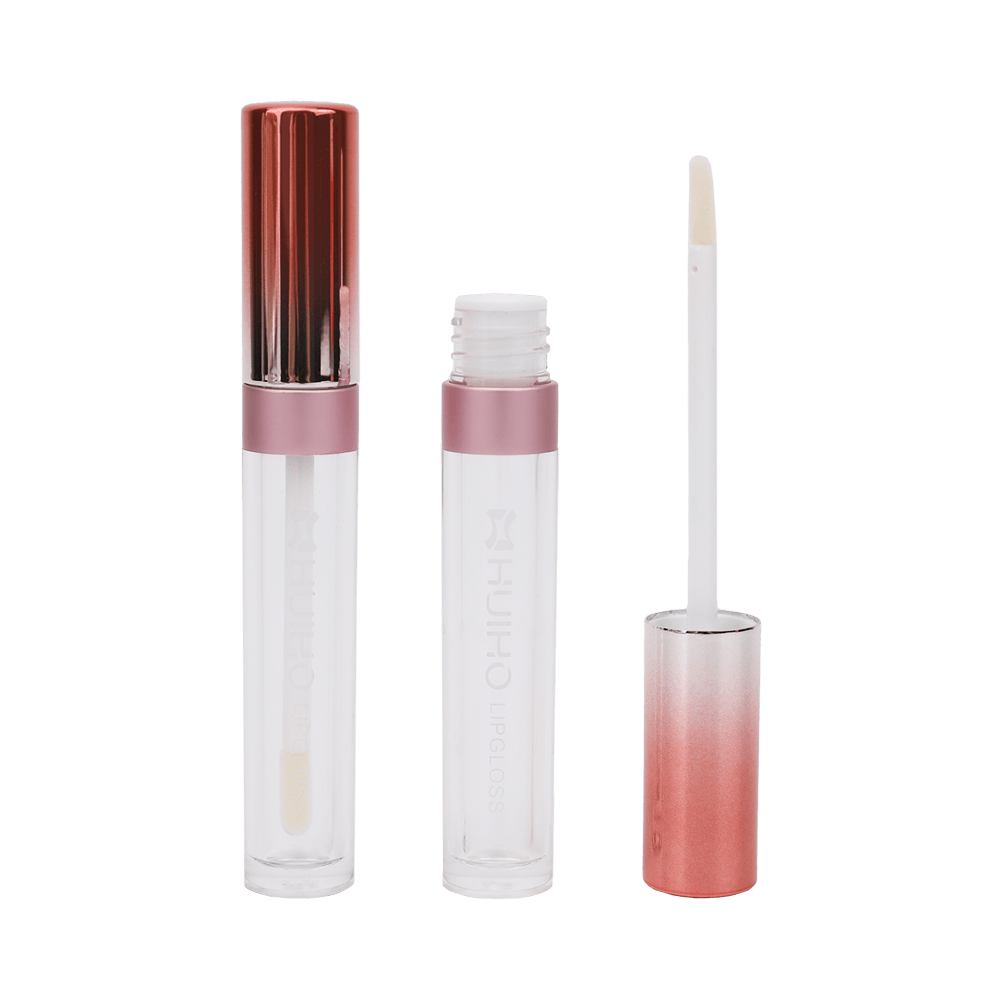 LG006 Empty Lip Gloss Tube ContainerΦ17 x 118 mm lip gloss tube from Ningbo Huiho, listed under Lip Gloss Tube and available for wholesale orders with a 20,000-unit minimum.View Product →
Concealer and cream stick formats follow similar logic, with tighter demands on dosing. A thicker formula needs a wider opening and a closure that seals against the paste without dragging product into the thread. Sample evaluation on the actual formula, not a lab gel, is the only reliable check.
 HL8322 Empty Foundation and Concealer Stick PackagingΦ23.1 x 102 mm stick container with a Φ16 mm cup for foundation, concealer, blush or highlighter, available in 20,000-unit wholesale orders.View Product →
Aluminum keeps a practical advantage. A used tube is a single material stream with real scrap value, and the metal can be remelted without losing quality. Thinner walls cut shipping mass, and refill or take back schemes work better when the container is one material. Laminate is the weakest option here, since the film layers are bonded and rarely separate in a kerbside system. Polyethylene tubes are technically recyclable, but collection remains thin in most markets, so a mono-material claim deserves a careful read of where the tube will actually be sold.
None of this is complicated, but the order matters. Start with the formula, decide the joint and the barrier it needs, then pick the body material that satisfies both. Drawings, finishes, and print come after that decision, not before it.
When a supplier answers the questions above with numbers and reports rather than reassurances, the tube that arrives on your filling line is usually the tube you specified.