Hello Ningbo Huiho Cosmetics Packaging Co., Ltd. - China Mascara Tubes Packaging Manufacturers


Choosing the best eyeliner case depends on three primary factors: the eyeliner formula it needs to hold, the quantity and variety of products to be stored, and the use context — whether for personal daily use, professional makeup artistry, or travel. A case that protects a liquid liner's precision tip while preventing drying is fundamentally different from one designed to store a collection of pencil liners for a working makeup artist. Getting the match right protects your products, extends their shelf life, and makes application faster and more organized.
Content
Eyeliners come in four main formats — liquid, pencil, gel, and felt-tip pen — and each has different storage requirements that should drive case selection:
| Eyeliner Type | Storage Priority | Best Case Format |
| Liquid liner (bottle + brush) | Upright storage; tip protection | Upright compartment case or brush roll with liner slots |
| Pencil liner (wood or mechanical) | Tip protection; easy retrieval | Pencil roll, elastic-loop case, or slotted tray |
| Gel liner (pot) | Horizontal stability; lid-up protection | Flat-tray organizer or stackable palette case |
| Felt-tip pen liner | Horizontal storage preferred; cap security | Zip pouch with elastic loops or flat cosmetic roll |
Liquid liners stored on their side or tip-down dry out at the tip; pencil liners stored loosely in a deep bag lose their points and collect debris. The case format should enforce the correct orientation and protect the product's functional end.
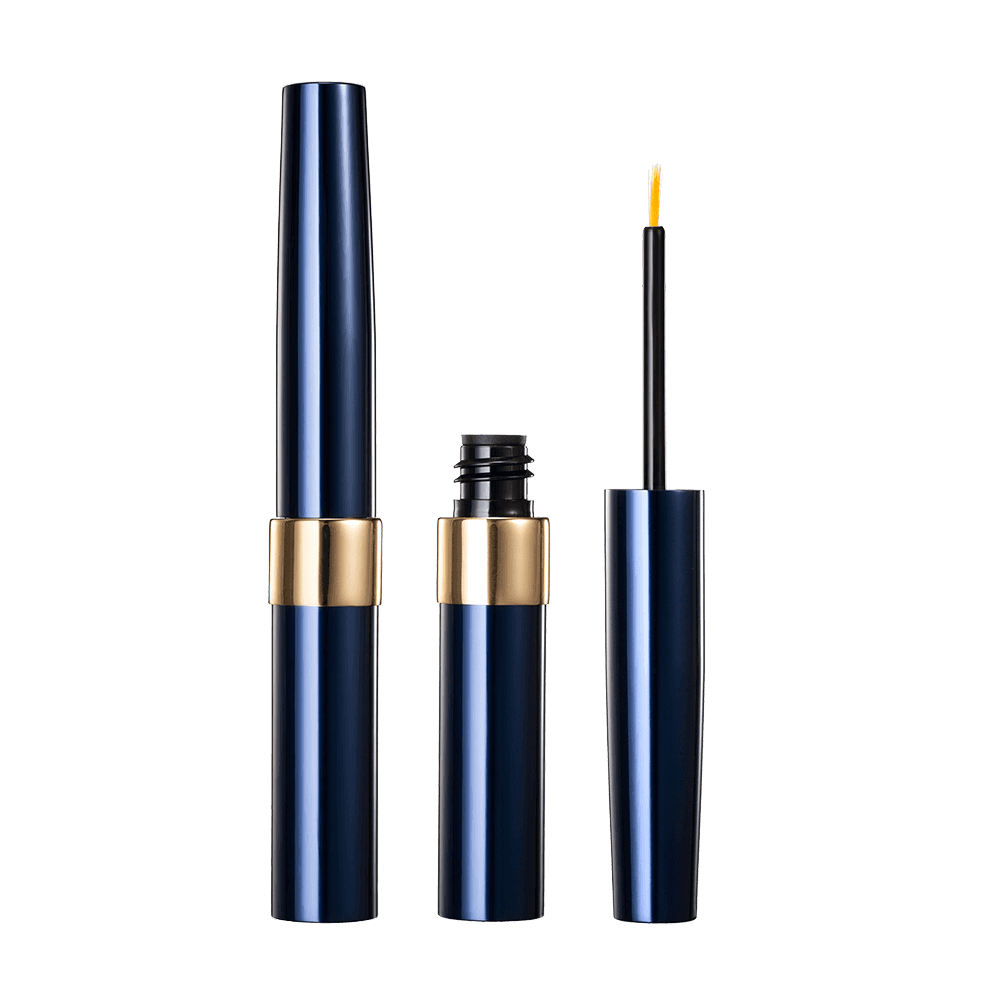
For personal use with a small eyeliner collection, a compact zip pouch or slim pencil case with a few elastic loops or inner pockets is sufficient. Look for a case small enough to fit in a handbag — typically under 20 cm in length — with a secure closure that prevents products from spilling during transport. Lightweight fabric or EVA foam construction adds minimal weight.
Professional makeup artists working with large liner collections need cases with high individual capacity and clear organization. Options include multi-layer makeup train cases with dedicated liner compartments, rolling professional makeup kits with removable trays, or wide pencil rolls with 20+ individual slots. The ability to see all products at a glance without searching is as important as protection — time is a critical factor in professional settings.
The case material determines how well it protects contents from impact, moisture, and temperature variation — particularly important for liquid liners that can freeze, overheat, or leak if improperly stored during travel.
Liquid and gel liners that open inside a bag create permanent staining damage. The closure mechanism is therefore a more critical selection criterion for eyeliner cases than it might appear:
For travelers, eyeliner cases must comply with airline liquid restrictions. Liquid eyeliners are subject to the 100ml per container rule in carry-on baggage in most countries. Practical travel case considerations include: