Hello Ningbo Huiho Cosmetics Packaging Co., Ltd. - China Mascara Tubes Packaging Manufacturers


When the formula for a new lip gloss is approved, the container decision carries more risk than most buyers expect. A batch of twenty thousand empty lip gloss tubes can hide subtle defects that surface only after filling: caps that seat unevenly, wiper rings that shift during assembly, or threads that bind after a month of use. The result is leaking product, returned goods, and a damaged reputation at retail. The lip gloss container is not a styling detail. It determines how well the product survives filling, shipping, and daily handling. This article explains what to inspect before you commit to a container, how materials compare, and how to choose a supplier that will not leave you troubleshooting quality issues alone.
Content
Reliability depends on three areas: closure sealing, applicator performance, and material compatibility. Failure in any one of them is enough to produce a defective product. The cap must engage the threaded neck with consistent torque, ideally within 25 percent variation across a batch. Uneven threads or caps that sit slightly cocked leave gaps where oil-based formula seeps out. An internal plug or gasket inside the cap also matters; if it is warped or varies in hardness, the seal weakens within weeks.
The wiper ring controls how much product reaches the applicator. Its opening must match the wand diameter within 0.1 to 0.2 millimeters. Too tight, and the wand returns a thin, dry-feeling layer. Too loose, and excess product pools around the neck and dries, sticking the cap. Material compatibility is the quieter risk. Lip gloss oils, esters, and SPF filters can haze or stress-crack some plastics. A thirty-day fill test at 45 degrees Celsius will expose hazing, deformation, or weight loss before you mass-produce. Check which container materials are preferred for lip gloss tube integrity before finalizing the package specification.
Most lip gloss containers use one of four materials: ABS, polypropylene, PET, or aluminum. ABS is the workhorse, combining moderate cost, impact resistance, and a good surface for painting or plating. Polypropylene is the cheapest and lightest but scratches more easily and has modest clarity. PET offers glass-like transparency, making it popular when the formula color is part of the appeal. Aluminum provides the strongest barrier, a premium feel, and the best environmental story, at a higher price and with limits on possible shapes.
| Material | Unit cost | Barrier | Clarity | Scratch resistance | Recyclability |
| ABS | Low | Moderate | Low | Good | Fair |
| PP | Lowest | Moderate | Moderate | Fair | Fair |
| PET | Low | Good | Excellent | Good | Good |
| Aluminum | Medium | Excellent | Opaque | Excellent | Excellent |
Eco-friendliness ratings for lip gloss container materials follow a clear hierarchy. Aluminum and PET lead because both are accepted by mainstream recycling streams. Polypropylene sits in the middle, since it is recyclable in theory but sorted less consistently in practice. ABS ranks lowest because mixed-material designs and coatings complicate recycling. These ratings matter for retail listings that now ask for a packaging end-of-life plan. Moving from ABS to PET is the least disruptive way to improve this score.
Material selection is tied to price positioning. A value-range gloss can justify ABS or polypropylene, while a premium refillable product needs aluminum. Match the material to the retail tier and expected shelf life, not just the unit cost.
Capacity shapes both the consumer experience and the unit economics. A standard single-end lip gloss tube holds 3.5 to 5 milliliters. Slim round formats trim that to about 2.5 milliliters for a travel-friendly silhouette. Double-end formats split the volume into two 3.5 milliliter chambers and have grown in popularity because they offer two shades in one compact unit, but they add real complexity: the divider between chambers must seal perfectly or the colors mix.
Typical fill volumes vary with container style and the usage habit the brand targets. Slim round tubes are made for on-the-go consumers, so they hold less than 3 milliliters. Standard single-end tubes are the most flexible, supporting roughly two months of daily use. Large single-end tubes create a value impression and show up often in budget lines. Double-end tubes deliver the same per-side volume as a standard single-end while adding a second shade. The volume decision directly changes gross margin, because the container cost stays nearly the same regardless of fill weight.
When you compare models, ask for wiper-and-wand draw test data at the exact capacity you plan to fill. For a standard single-end launch, empty lip gloss tube containers from the LG006 series come with matched wiper-and-wand sets that work with common gloss viscosities. For a dual-shade project, double-end lip gloss cases such as LG048 address the divider-seal issue through dedicated tooling. Use the manufacturer's stated fill range as a starting point, then verify with a trial fill on your own line. Also review how to determine the correct lip gloss tube size and capacity so the final choice matches your price point and consumer habit.
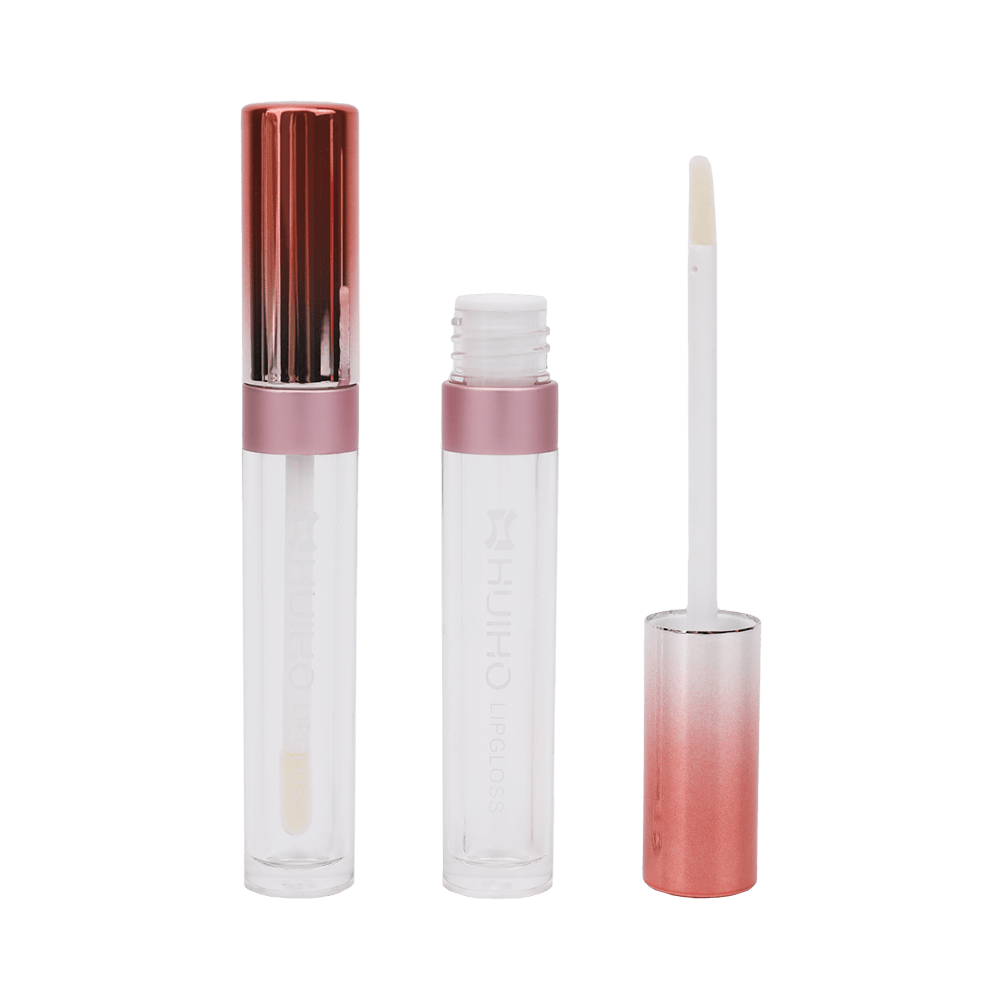
 Wholesale Lip Gloss Cases LG048 Manufacturers, OEM Factory - Ningbo Huiho CosmetNingbo Huiho Cosmetics Packaging Co., Ltd. is China wholesale Lip Gloss Cases LG048 manufacturers and OEM factory, details:View Product →
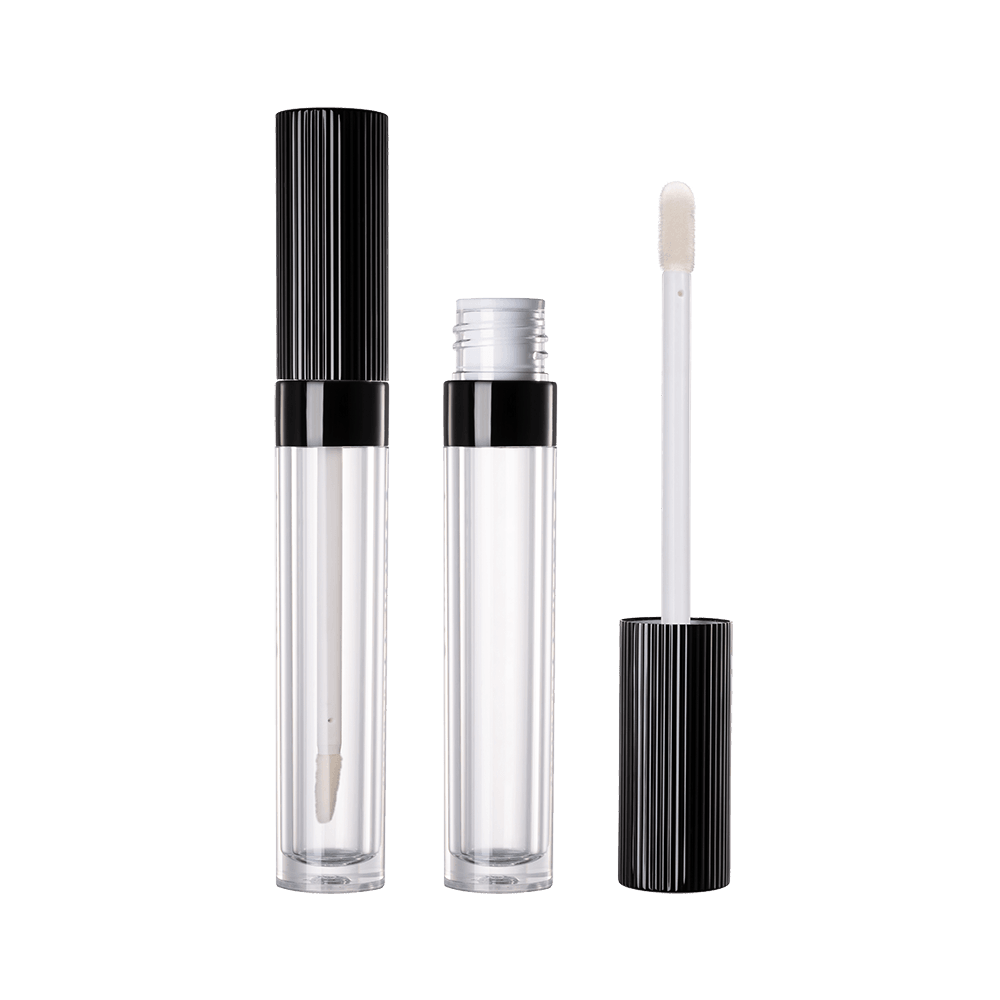
 Wholesale Empty lip gloss tube containers LG006 Manufacturers, OEM Factory - NinNingbo Huiho Cosmetics Packaging Co., Ltd. is China wholesale Empty lip gloss tube containers LG006 manufacturers and OEM factory, details:View Product →
Customization turns a container into a brand asset. The three levers are color, texture, and decoration. Resin tinting colors plastic bodies during molding; anodizing colors aluminum and can create matte or brushed textures that resist fingerprints. Spray coating adds soft-touch and pearl finishes. For decoration, screen printing is economical for one or two colors, while thermal transfer handles fine gradients and detailed logos on curved surfaces. Ask any supplier for cross-hatch adhesion and rub test results before approving a finish. A logo should survive 100 dry rubs and 50 rubs with a 50 percent ethanol solution without visible fading. For mid-range launches, round single-end lip gloss cases from the LG040 range accept a wide variety of coating and printing options while keeping the unit cost moderate.
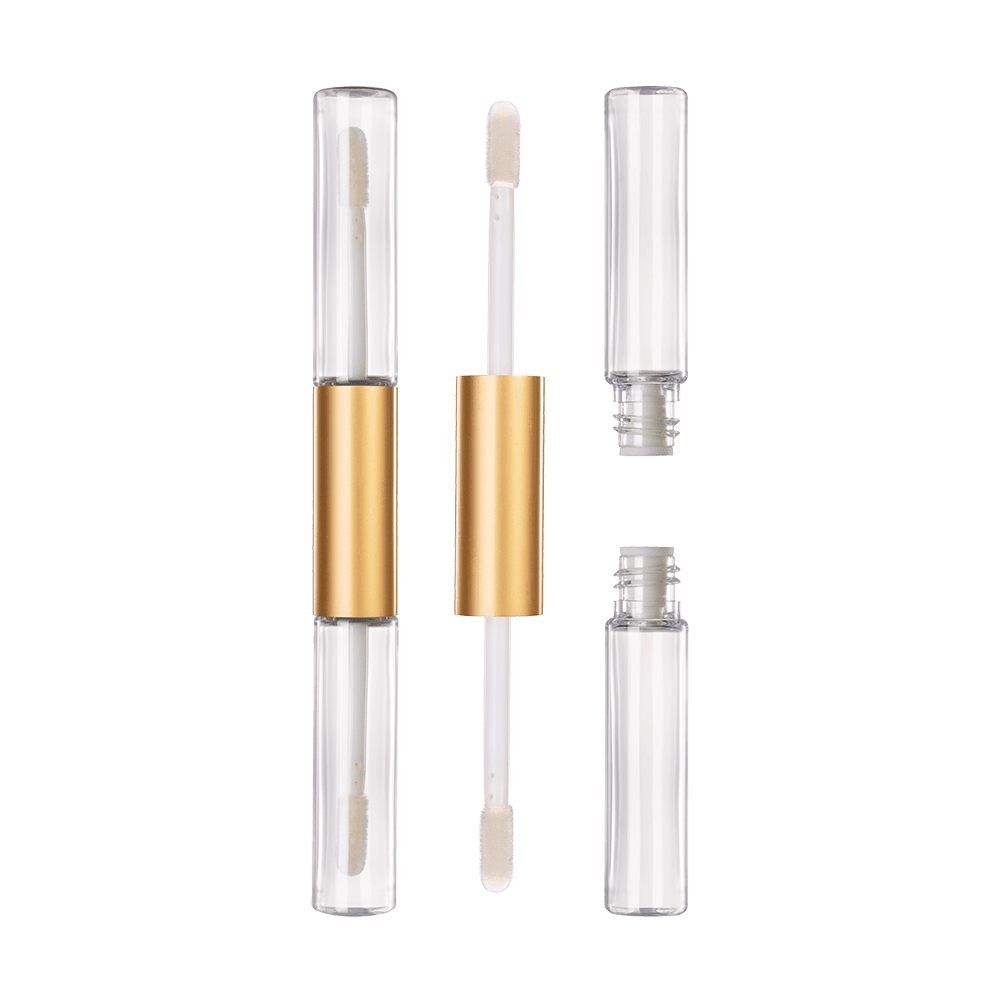 Wholesale Double end lip gloss tube Manufacturers, OEM Factory - Ningbo Huiho CoNingbo Huiho Cosmetics Packaging Co., Ltd. is China wholesale Double end lip gloss tube manufacturers and OEM factory, details: Des: Doub...View Product →
A dependable supplier documents inspections for dimensions, appearance, leakage, and torque. Critical dimensions such as outer diameter, thread pitch, and opening diameter should hold a tolerance of plus or minus 0.1 millimeter. Appearance acceptance typically follows AQL 2.5 for major defects. The production qualification checklist should cover:
This radar comparison shows why material choice is never a single-score decision. Aluminum leads on sealing, durability, aesthetics, and eco-friendliness, which is why premium brands accept its higher cost. ABS counters with better cost efficiency and lighter weight, making it suitable for high-volume value lines. The largest gap appears on the eco axis, where ABS drops sharply despite its manufacturing advantages. Weight matters for shipping cost across a full container order. A brand targeting a premium shelf position will find the aluminum profile more persuasive, while a brand chasing volume economics may prefer ABS.
Sustainability expectations have moved from optional to standard for lip gloss packaging. Retailers now ask for recyclability data, and consumers notice container material when they decide whether to repurchase. The shift is visible in the share of recyclable and refillable packaging among new launches.
The rising share of sustainable formats in lip gloss launches reflects changes across the whole value chain. Between 2022 and 2024, growth came mainly from PET mono-material bottles and lighter wall thicknesses. After 2024, refillable aluminum systems gained ground as brands looked for a stronger environmental narrative. By 2026, more than half of new launches use either a recyclable mono-material body or a refillable structure. This shift means a new product designed with a non-recyclable hybrid structure may soon face listing pressure. Designing with recyclable materials from the start avoids a costly redesign later.
The supplier matters as much as the container design. A manufacturer with in-house injection molding, aluminum processing, and assembly can control quality and cost far better than a trading company that sources parts separately. Ask for the supplier's inspection records, lead time, and sample policy before committing. A supplier that shares failure rates and test data openly is more likely to fix problems quickly. The right partner will carry the lip gloss launch smoothly from the first pre-production sample to the final shipment.