Hello Ningbo Huiho Cosmetics Packaging Co., Ltd. - China Mascara Tubes Packaging Manufacturers


Empty Aluminum Mascara Tubes serve four core functions: they contain and protect the mascara formula, deliver a controlled and consistent amount of product to the applicator wand on every use, seal the formula airtight between uses to prevent drying and contamination, and communicate brand value through premium material and finish. Every design decision in an aluminum mascara tube -- from barrel wall thickness to wiper aperture diameter -- is engineered to fulfill one or more of these four roles.
Unlike generic plastic mascara packaging, aluminum tubes accomplish all four functions with a level of material performance that plastic cannot match: zero oxygen and moisture transmission through the barrel walls, structural rigidity that maintains wiper seal integrity over hundreds of use cycles, chemical inertness that protects sensitive formula ingredients, and a surface quality that supports the widest range of premium decorative finishes. Understanding what these tubes actually do -- and why aluminum does it better than alternative materials in many applications -- is essential for brands, formulators, and packaging buyers evaluating their options.
Content
The primary job of any mascara tube is to hold the formula safely from the point of filling at the manufacturer through to the last application by the consumer -- a period that may span 18 to 30 months including shelf time and in-use period. During this time, the tube must protect the formula from four categories of degradation: oxidation, moisture loss, microbial contamination, and UV-induced color change.
Many mascara formulas contain unsaturated oils, vitamin-derived actives, or pigment systems that are vulnerable to oxidation. When oxygen contacts these ingredients, it triggers chemical reactions that alter viscosity, odor, and color -- all of which affect consumer perception and product safety. Aluminum provides a zero oxygen transmission rate (OTR) through the barrel walls regardless of wall thickness, a performance level that no plastic packaging material achieves without additional barrier coatings. For context, standard PET plastic has an OTR of approximately 3 to 10 cc/(m2 x day x atm) depending on thickness; aluminum is zero (source: European Aluminium Packaging, Sustainability Report 2022).
Mascara formulas are water-sensitive systems. Water loss through packaging walls thickens the formula progressively, making the wand harder to withdraw and the formula clumpier and more difficult to apply. Water gain from high-humidity environments has the opposite effect -- thinning the formula and reducing its film-forming and volumizing performance. Aluminum's zero water vapor transmission rate (WVTR) eliminates both problems entirely, maintaining the formula at its designed viscosity from fill date to last use. This is particularly valuable for products formulated at the margin of acceptable viscosity range, where even modest water activity change shifts performance noticeably.
While bare aluminum is naturally protected by a thin aluminum oxide layer, cosmetic formulas -- particularly those with low pH, high salt content, or strong chelating agents -- can interact with metal surfaces over time. Quality aluminum mascara tubes address this with an interior lacquer lining, typically a BPA-free epoxy or polyester coating, that creates a chemically inert interface between the formula and the aluminum barrel. This lining also meets the requirements of EU Regulation 10/2011 (food contact plastics, widely referenced for cosmetic packaging compliance) and FDA 21 CFR Part 175 for US market products.
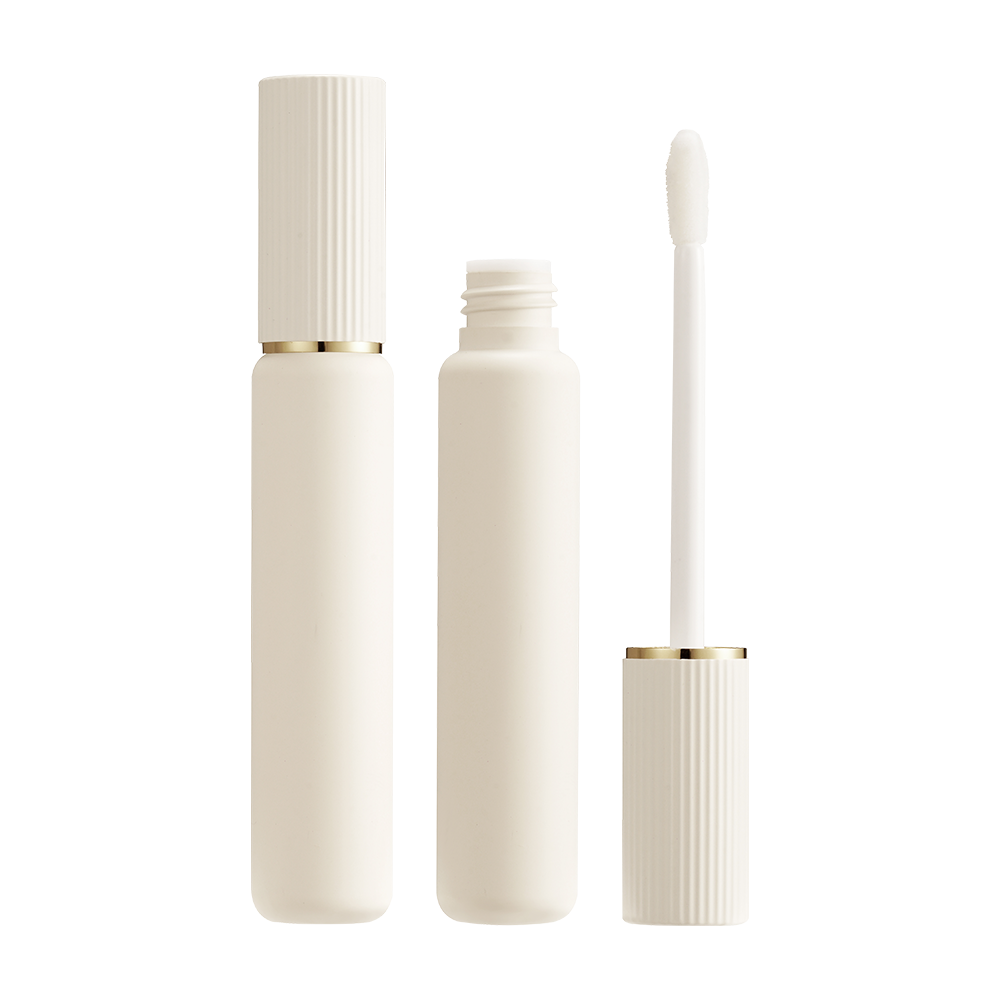
Unlike clear glass or transparent plastic, aluminum is completely opaque to visible light and UV radiation. Mascara pigments -- particularly organic colorants used in black, brown, and colored mascaras -- can undergo photodegradation with prolonged UV exposure, leading to color shift and reduced tinting strength. The aluminum barrel provides complete light exclusion without any additional UV-blocking additive or secondary packaging, simplifying the formulation requirements and reducing overall packaging complexity.
The delivery function of a mascara tube is accomplished primarily by the wiper insert -- a precisely engineered elastomeric seal at the tube neck through which the wand passes on every use. The interaction between the wiper and the wand stem is the most mechanically active part of the entire system and has the greatest influence on the consumer's application experience.
When the consumer withdraws the wand, the wiper aperture -- which is 0.5 mm to 1.5 mm smaller in diameter than the wand stem -- maintains contact with the full circumference of the stem and scrapes excess formula back into the reservoir as the stem passes through. The amount of formula remaining on the wand after the wipe is determined by the interference fit (the difference between wand diameter and wiper aperture diameter), the wiper lip angle, and the wiper material's hardness and compression set characteristics. A tighter wiper leaves a lighter formula load on the wand; a looser wiper passes more product. This relationship is the primary engineering lever for matching the tube's product delivery to the formula's viscosity and the intended application effect.
The wand length is calibrated so that the applicator tip reaches the base of the formula reservoir -- ensuring that formula can be accessed until the tube is near empty -- while the wand stem engages the wiper along its full insertion length. If the wand is too short, formula pooling at the base of the tube becomes inaccessible. If too long, the applicator may bottom out and damage the tube or create excessive formula displacement on insertion. Quality aluminum mascara tube suppliers validate wand-to-tube dimensional fit during the tooling qualification process before production approval.
A standard mascara product is used an average of 100 to 150 times before being discarded, based on typical daily use over a 3-month period after opening (source: Cosmetics Europe, Consumer Insights on Cosmetic Product Use, 2021). The wiper must maintain its sealing and wiping geometry consistently across all of those cycles without significant compression set (permanent deformation of the wiper aperture from repeated wand passage). Thermoplastic elastomer (TPE) and silicone wipers used in quality aluminum tubes are formulated to maintain dimensional stability and elasticity across this full use cycle range, ensuring that the first application and the 150th application deliver the same product load to the wand.
Between each application, the mascara formula inside the tube must be isolated from the external environment to prevent drying, skinning, microbial ingress, and contamination from debris. This sealing function is accomplished through two mechanisms working in combination: the wiper insert and the cap closure.
Even when the wand is withdrawn for application and the cap is momentarily open, the wiper insert maintains a seal across the tube opening. The wiper's contact with the wand stem prevents formula from being exposed to the surrounding air beyond the immediate opening surface. This is a meaningful functional difference from tube designs with large, uncontrolled openings, which allow rapid formula drying at the neck and progressive thickening of the product accessible to the wand on each subsequent use.
When the cap is screwed or snapped onto the tube neck, it applies compression to the wiper insert, increasing the seal force at the aperture and around the wiper perimeter. This dual-action sealing -- wiper aperture closed around the wand stem, wiper perimeter sealed against the tube neck by the cap -- creates the airtight closure that protects the formula between uses. Cap torque specifications for mascara tubes are typically 0.3 to 0.8 N*m, providing adequate seal compression without creating an opening force that is difficult for the consumer. The rigid aluminum barrel maintains the dimensional precision of the wiper seat that makes this torque-seal relationship reliable throughout the product's life.
Mascara is applied in close proximity to the eye, making the prevention of microbial contamination in the formula a safety-critical function of the packaging. The sealed tube environment limits the exposure of the formula to the environmental microbial load and limits the entry of applicator-transferred contamination into the bulk formula reservoir. EU Cosmetics Regulation 1223/2009 requires mascaras to have a Period After Opening (PAO) designation -- typically 6M (6 months) for eye cosmetics -- that the packaging design must support. The sealed aluminum tube with elastomeric wiper is the established format for meeting this requirement reliably.
The functional performance of an aluminum mascara tube is only one dimension of what these components do. At the point of sale and in the hands of the consumer, the tube is the most visible and tactile expression of the brand's positioning. Aluminum's material properties make it the packaging substrate of choice for brands seeking to communicate quality, sustainability, and differentiation.
Aluminum mascara tubes are significantly more rigid than plastic equivalents of comparable wall thickness and are perceived by consumers as higher quality based on tactile evaluation alone. Research in cosmetic packaging consumer preference studies (Mintel, Global Beauty Packaging Trends, 2023) consistently identifies metal packaging as the material most strongly associated with luxury, quality, and premium positioning across all cosmetic product categories. The thermal conductivity of aluminum -- which causes the tube to quickly reach ambient temperature after being picked up, rather than retaining hand warmth -- contributes to the cool, refined tactile experience that distinguishes metal packaging.
The exterior surface of an aluminum mascara tube can be finished and decorated using a range of processes that are not available or practical on plastic substrates. The most common finish options and their visual and brand positioning effects are summarized below.
| Finish Type | Process | Visual Character | Brand Positioning |
| Anodizing | Electrochemical conversion of surface aluminum to aluminum oxide | Satin to semi-gloss; integral color; no surface coating | Prestige, understated luxury, durability |
| Powder coating | Electrostatic application and thermal cure of dry polymer powder | Matte, satin, or gloss; wide color range | Contemporary, color-forward, clean beauty |
| UV printing | Direct digital printing cured by UV light | Full-color photographic quality, precise graphic detail | Creative, design-led, limited edition |
| Hot stamping | Heat and pressure transfer of metallic foil to surface | Metallic gold, silver, holographic; accent detail | Luxury, high-end, celebratory |
| Silk screen printing | Ink pressed through mesh screen onto tube surface | Solid colors, brand logos, text; high opacity | Classic, brand-consistent, versatile |
| Mirror polishing | Mechanical polishing of bare aluminum to high reflectivity | Chrome-like mirror reflection | Ultra-luxury, statement, collector appeal |
The sustainability profile of aluminum packaging has itself become a brand value communication element. According to the International Aluminium Institute (IAI), approximately 75% of all aluminum ever produced remains in use today, reflecting its near-infinite recyclability without material downcycling. Recycling aluminum requires only 5% of the energy needed to produce primary aluminum from bauxite ore (source: European Aluminium Association). For brands with documented sustainability commitments, aluminum mascara tubes provide a credible, third-party-verifiable packaging choice that supports those claims at the point of sale and in brand communications.
The functions of aluminum mascara tubes play out differently depending on who in the value chain is interacting with them. The same tube does different things for a cosmetic formulator, a brand manager, a filling line operator, and an end consumer.
The performance of an aluminum mascara tube is a system outcome -- the result of all its components working together within defined tolerances. A change in any one component affects the performance of the others. The table below maps the key components to their primary functions within the system.
| Component | Primary Function | Key Performance Parameter | What Fails If It Is Wrong |
| Aluminum barrel | Containment, barrier, structure, decoration surface | Wall thickness 0.3--0.6 mm; inner diameter tolerance | Formula degradation; wiper seal fit; cap thread engagement |
| Interior lining | Formula compatibility; regulatory compliance | Coating thickness uniformity; cure completeness | Metal-formula interaction; stability failure; regulatory non-compliance |
| Wiper insert | Product delivery control; primary seal when cap open | Aperture diameter; lip angle; material hardness | Incorrect product load; formula drying at neck; leakage |
| Cap closure | Secondary seal; wiper compression; consumer interface | Thread engagement torque 0.3--0.8 N*m | Air ingress; formula drying; accidental opening |
| Wand and applicator | Formula transfer to lashes; application pattern | Stem diameter vs. wiper aperture; bristle geometry | Incorrect product load; formula not reaching applicator base; poor lash coverage |
One of the most practically significant things aluminum mascara tubes do is extend the window of formula stability -- the period during which the formula performs as intended -- compared to alternative packaging materials. This is a function of the cumulative barrier performance of the complete tube system rather than any single component.
Cosmetic packaging suppliers and brands test formula-package compatibility under accelerated aging conditions to predict shelf-life performance. Standard protocols include storage at 40 degrees C / 75% relative humidity for 12 weeks (approximately equivalent to 12 months at ambient conditions, per ICH Q1A stability testing guidelines widely adopted in cosmetic product development). Mascara formulas in aluminum tubes consistently outperform the same formulas in standard plastic tubes on viscosity stability, color consistency, and preservation system efficacy at the end of these accelerated test periods, due to the elimination of moisture exchange and oxygen ingress through the packaging walls.
For brands distributing globally, climate variation between markets creates significant packaging performance challenges. A formula packaged in high-barrier aluminum is exposed to the same moisture and oxygen transmission rates in tropical Southeast Asia (average annual relative humidity above 80%) as in the dry climates of the Middle East or the cold winters of Northern Europe -- which is to say, zero transmission in all cases. This climate-neutral barrier performance simplifies global formula and packaging validation, as the same combination can be approved for all markets without climate-specific reformulation or secondary barrier packaging.
For buyers sourcing Empty Aluminum Mascara Tubes for the first time or evaluating new suppliers, understanding what the tube must do in their specific application determines which specifications to prioritize in the sourcing brief. The following checklist covers the essential parameters.
Yes, measurably so. The zero WVTR of aluminum prevents the water loss through the barrel walls that progressively thickens mascara formula in plastic tubes. The wiper and cap closure sealing at the neck is the same in both material types -- so the main variable is barrel wall transmission, which aluminum eliminates entirely and plastic does not. For water-in-oil and fiber-containing mascara formulas that are particularly sensitive to water content change, this difference is practically significant over the product's 3-to-6-month typical in-use period.
The structural durability of aluminum makes refillable mascara tube formats technically viable in a way that thin-wall plastic tubes are not. The aluminum barrel resists deformation and maintains its dimensional tolerances through repeated wiper engagement, cap threading, and handling cycles that would degrade plastic equivalents. Several prestige and clean beauty brands have launched refillable mascara systems using aluminum outer tubes with replaceable inner formula cartridges, reducing total packaging material consumption per refill by an estimated 60 to 80% compared to full tube replacement.
The wiper is the component that most directly determines the consumer's application experience. It controls how much formula is on the wand at each use, it seals the tube neck when the cap is open, and it must maintain these functions across the full use life of the product. Wiper specification -- aperture diameter, material, lip geometry -- is arguably the highest-impact engineering decision in mascara tube design, and it must be made in conjunction with formula viscosity data and wand geometry to achieve the intended application result. A tube with an incorrectly specified wiper will produce either an overloaded (clumping) or underloaded (insufficient coverage) application regardless of how well the formula itself is designed.
Aluminum's recyclability credentials are among the strongest of any packaging material in common cosmetic use. The material is collected and recycled at high rates in established markets -- the EU aluminum packaging recycling rate exceeded 76% in 2021 (source: European Aluminium Association, Recycling Statistics 2022) -- and recycled aluminum retains the same material properties as primary aluminum, enabling genuine closed-loop recycling. For brands publishing packaging sustainability reports, EPD (Environmental Product Declaration) data, or LCA (Life Cycle Assessment) results, aluminum mascara tubes provide a packaging choice with documented, verifiable environmental credentials.