Hello Ningbo Huiho Cosmetics Packaging Co., Ltd. - China Mascara Tubes Packaging Manufacturers


A cream concealer that strands 18 percent of its fill below the applicator is a refund problem, not a packaging preference. That number explains why airless metered dispensers have moved out of premium skincare and into everyday color cosmetics: a follower piston tracks the formula down the barrel, the pump chamber releases a fixed volume on every stroke, and almost nothing is left behind. The short answer comes first. If your formula is a semi-solid, a gel, or a low-viscosity cream, an airless metered dispenser gives you tighter dose control and a higher evacuation rate than any other mainstream pack. What you pay for that control is a longer specification cycle, a different filling method, and a higher unit cost.
Content
Four parts do the work: the container body, the follower piston, the metering pump, and the actuator. Pressing the actuator empties a spring-loaded chamber through the nozzle, and releasing it refills that chamber from the reservoir while pulling the follower piston upward by exactly the volume that left the pack. Because nothing replaces the displaced product, air never enters the reservoir.
Metering is a mechanical property, not a filling property. Chamber volume sets the dose, typically 0.15 ml to 0.30 ml per stroke for facial products. Always specify that dose in grams, because density varies. A 0.20 ml chamber running a 1.02 g/ml cream releases about 0.204 g per stroke, and a lighter emulsion changes the delivered weight without anyone touching the tooling. The practical consequences are priming, a changing actuation force as the pack empties, and a rule that every formula change is a re-validation event.
| Format | Air contact in use | Typical dose repeatability | Fill left at end of life | Best-fit formulas |
|---|---|---|---|---|
| Airless metered dispenser | None | plus or minus 3 to 6 percent | 3 to 6 percent | Creams, gels, semi-solids |
| Airless bottle, free-flow pump | None | plus or minus 8 to 12 percent | 5 to 9 percent | Lotions and thin serums |
| Dip-tube pump bottle | Continuous | plus or minus 10 to 15 percent | 12 to 18 percent | Watery liquids |
| Squeeze tube | Continuous | Set by the user | 8 to 15 percent | Gels, balms, value lines |
| Rigid click stick | None | Fixed steps, not metered | 10 to 20 percent | High-wax solid sticks |
The bars show how much of the original fill stays inside the pack when a consumer decides the product is finished. An airless metered dispenser loses the least, around 4 percent, because the follower piston keeps pushing the formula toward the pump inlet until the reservoir is nearly flat. A free-flow airless bottle follows at roughly 7 percent, and the extra loss comes from the pump inlet sitting a few millimetres above the bottom of the barrel. Squeeze tubes and dip-tube pumps climb to 11 and 15 percent, since product clings to the walls and the dip tube cannot reach the last centimetre. A rigid click stick performs worst at about 16 percent, because the mechanism advances in fixed steps and the final step is rarely enough to expose the last of the formula. On a 15 ml unit, moving from 15 percent to 4 percent leftover recovers about 1.65 ml of product per pack, which matters when the formula carries an expensive active.
Write the dose requirement as a weight, a tolerance, and a test method. A workable clause reads: 0.200 g per stroke, plus or minus 5 percent, measured over 25 consecutive strokes after a five-stroke priming sequence, with the formula conditioned for 24 hours at 25 degrees Celsius. Free-flow airless bottles typically sit in the plus or minus 8 to 10 percent band, and dip-tube pumps drift wider still.
Priming needs its own line in the purchase order. Four or five strokes are normally required before the chamber is full, so decide whether those strokes count toward the declared fill volume. If a customer pays for 15 ml, a priming sequence that consumes 1 ml is a claim the brand has to answer for.
Temperature moves the number more than most teams expect, because apparent viscosity and pump friction both shift with heat. Test at 5, 25, and 40 degrees Celsius, and log actuation force beside dose. Beyond roughly 40 newtons, users start describing the pack as stiff.
The two lines trace average dose weight across 30 consecutive actuations, which is how a metering fault usually shows itself long before it reaches a consumer. The solid line stays between 0.198 g and 0.202 g for the whole run, a spread of about 2 percent, because the pump chamber fills to the same volume every time. The dashed line starts slightly higher and then slides from 0.208 g to 0.164 g, a fall of about 21 percent that a user would feel as the pack emptying faster than expected. That drift has little to do with the pump: it comes from product clinging to the walls of the reservoir and from air slowly taking the place of what was dispensed. A dose record like this is worth keeping for every production lot, because a shift of more than 5 percent between the first and last strokes points to a viscosity or piston-fit problem. Testing the same pack at 5 and 40 degrees Celsius produces the same shape of curve, merely stretched or compressed.
Concealer, liquid blush, brow pomade, and cream bronzer share two traits: a yield value high enough that they do not flow on their own, and pigments that oxidize or dry out once they meet air. A sealed reservoir with a follower piston addresses both at once. Because oxygen only reaches the product at the nozzle, brands can often lower preservative levels, which in turn reduces the irritation risk that shows up in review data.
The real comparison is not airless against nothing. It is airless against a stick, a pen, or a tube. A rigid stick cannot meter, so the consumer sets the dose and the payoff varies between applications. Sticks remain the better answer for high-wax formulas and for brands that want a solid, water-free claim, and the seal between barrel and cap is what decides whether that claim survives the shipping test, as these notes on the sealing characteristics of concealer stick tube materials explain.
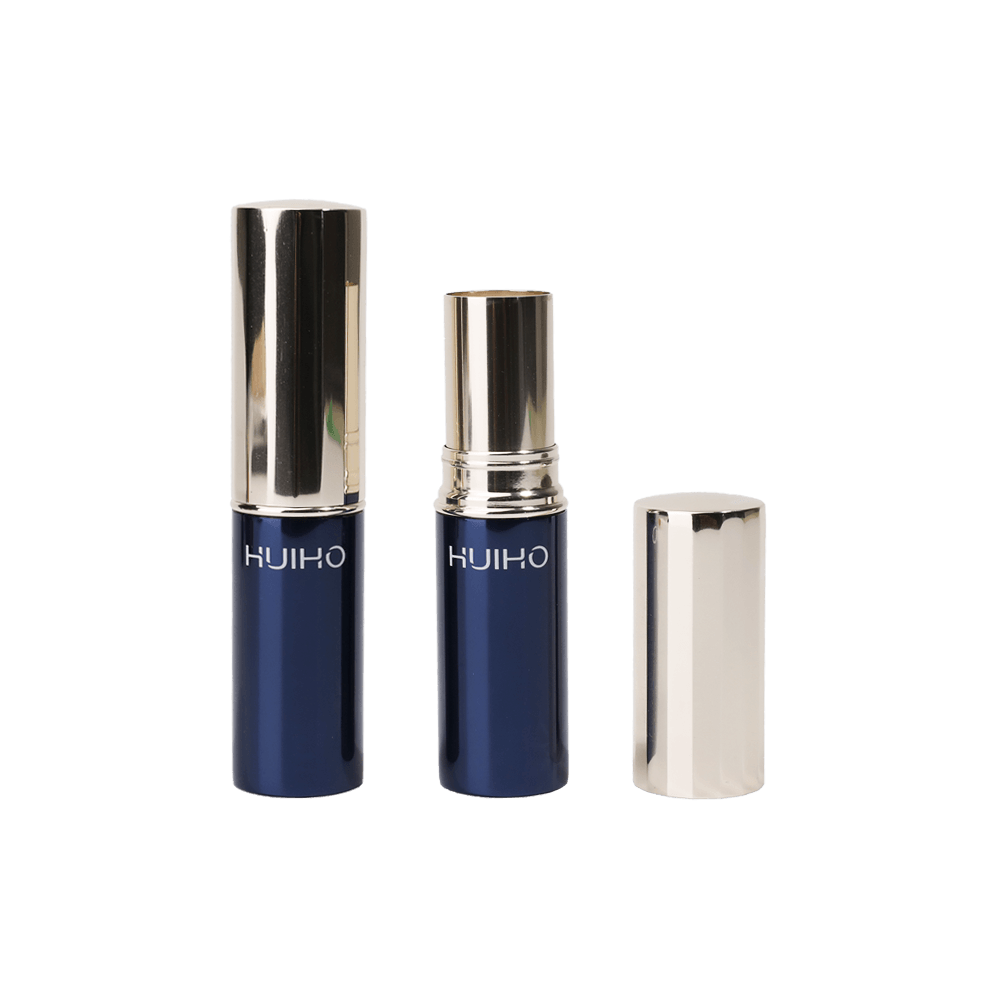 Concealer Stick Packaging Empty Foundation, Concealer Stick, Blush Stick,Highlighter Stick HL8Location: China Product Name: Concealer Stick Packaging Empty Foundation, Concealer Stick, Blush Stick,Highlighter Stick HL8323 Business Type: Manufacturer, Exporter Terms...View Product →
The radar compares an airless metered dispenser with a conventional wand or tube applicator across six attributes that buyers weigh against one another. The dispenser pulls far ahead on dose accuracy, oxidation barrier, and evacuation rate, the three attributes that drive formula protection and complaint volume. It falls behind on unit cost efficiency, where a simple tube is hard to beat, and on consumer familiarity, because users already know how to squeeze a tube. Refill potential sits in the middle, since a metered pack can be built with a replaceable inner reservoir, but that adds assembly steps and a second part number. The conventional applicator wins on cost and familiarity and loses on everything connected to the formula itself, which is the trade-off a brand has to price out. Nothing in the chart is fixed, because a lighter pump chamber and a shorter actuator can lift the dispenser on cost without touching the other five axes.
Airless metered dispensers are filled one of two ways, and the choice affects tooling, line speed, and dose stability for the life of the program.
Bottom fill handles high-viscosity bulks and gives wider fill volume flexibility, which is why most thick creams and gels run that way. It also carries the bigger risk: any air whipped into the bulk at the filling nozzle stays in the reservoir, and that pocket shows up later as a short dose, a soft first stroke, or product creeping past the piston. Top fill suits lower-viscosity emulsions and shorter runs, but the pump seals have to be checked against the formula for swelling, and product left in the chamber after filling is a real yield loss.
Two process details prevent most of these failures. Hold the bulk between 20 and 25 degrees Celsius and deaerate it under vacuum or slow agitation before the nozzle. Then let filled units rest until the follower piston settles before measuring anything, because a dose reading taken thirty seconds after filling is not a reading.
Run these on the final production tooling, with the production formula rather than a lab substitute.
The purpose of the list is to find failure modes while a chamber volume or a bulk viscosity can still be changed, rather than while the artwork is already printed.
The columns show the share of sample submissions that passed the full acceptance test on the first attempt, grouped by dispensing format. Airless metered dispensers come out highest at 94 percent, largely because the dose clause is verified with a simple weight check rather than a judgment call. Free-flow airless bottles fall to 88 percent and click sticks to 83 percent, where failures cluster around actuation force and cap retention. Dip-tube pumps and squeeze tubes sit at 79 and 71 percent, and their rejections usually trace back to leakage and inconsistent evacuation rather than to the mould itself. The pattern is useful at the quoting stage: formats with fewer variables in the dose path tend to cost less in rework and requalification, even when the unit price looks higher.
Airless metering is not the default answer for every formula, and three cases point elsewhere. If the formula is a solid stick above roughly 20 percent wax, a mechanical stick gives the user direct control and removes the pump from the cost structure. If the product is a thin liquid applied with a wand, a wiper and a fitted brush deliver better control than a metered pump at a fraction of the price. If the item is a low-viscosity lip product where the applicator is part of the experience, a slim tube with a doe-foot is simpler to fill, simpler to ship, and simpler to explain on the label.
For solid and semi-solid stick programs, the decisions that matter most are barrel diameter, cap retention, and the internal finish that keeps product from sticking to the wall.
 Empty Foundation, Concealer Stick, Blush Stick,Highlighter Stick HL8322Location: China Product Name: Empty Foundation, Concealer Stick, Blush Stick,Highlighter Stick HL8322 Business Type: Manufacturer, Exporter Terms of payment and delivery: ...View Product →
For liquid color products, the trade-offs shift to nozzle and wiper geometry, because how much product ends up on the applicator matters more than how much sits in the pack.
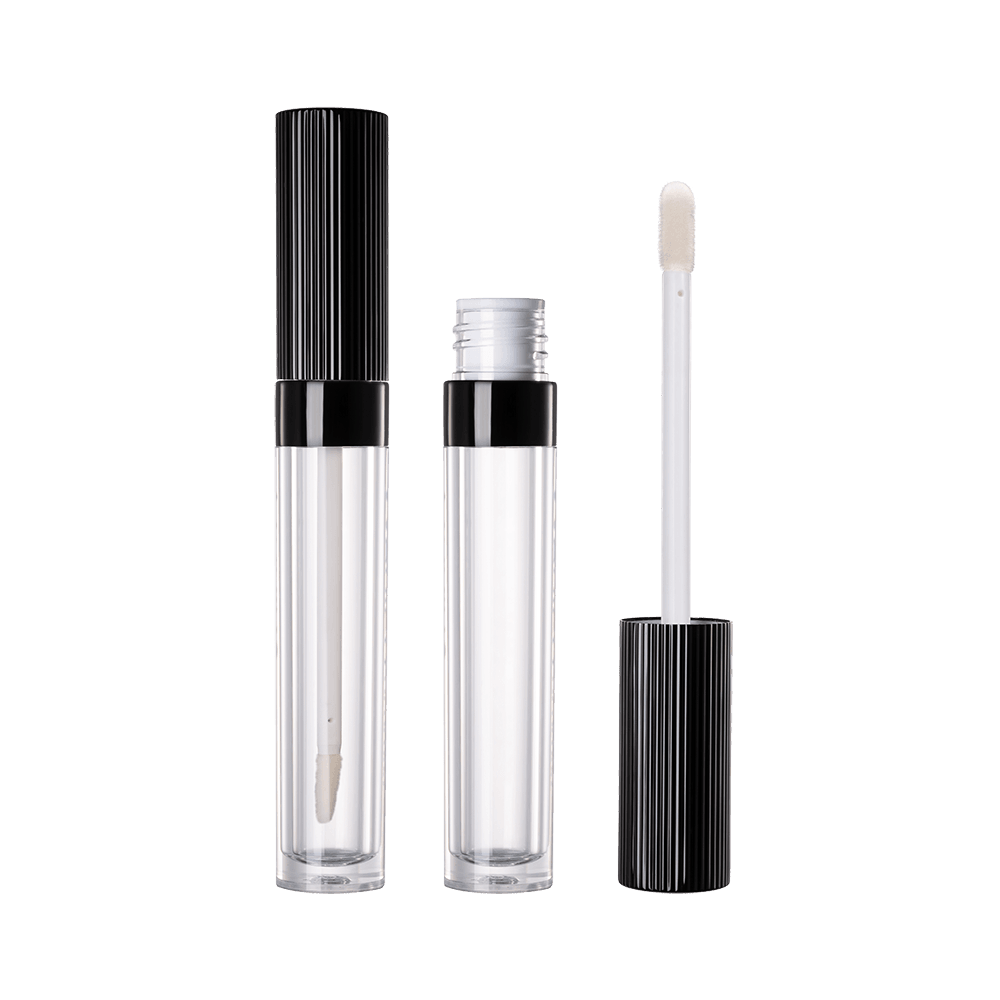 Lip Gloss Cases LG048Location: China Product Name: Lip Gloss Cases LG048 Business Type: Manufacturer, Exporter Terms of payment and delivery: FOB Minimum order quantity: 20k Price: Consult...View Product →
Choose the dispenser by the formula, not by the category. A cream that oxidizes, needs a fixed dose, and supports a premium price belongs in an airless metered dispenser. A high-wax stick or a wand-applied liquid usually does not, and forcing one format into the other adds cost without adding performance. Whichever route you take, settle the dose clause, the filling method, and the QC list before the tooling is cut, because those three decisions are cheap to change on paper and expensive to change on a mould.
Ningbo Huiho Cosmetics Packaging produces aluminum and plastic color cosmetics packaging across two own factories, runs an in-house laboratory, and develops parts from customer drawings or samples, so the specification conversation can start from your formula instead of a stock catalogue. The earlier that conversation begins, the fewer surprises end up in the first production run.