Hello Ningbo Huiho Cosmetics Packaging Co., Ltd. - China Mascara Tubes Packaging Manufacturers


Picture a 30 ml foundation bottle that has spent five weeks in a handbag. With a dip tube, the last fifth of the formula sits at the bottom of the bottle, and every stroke of the pump pushes a little air back into the chamber. Swap that bottle for an airless pump bottle and the formula never meets air again, because a piston rises from the base and keeps the product pressed against the pump inlet.
The buying decision comes down to one line. Choose airless when the formula is expensive, oxygen sensitive, or built on volatile silicones, and accept a higher unit cost, a tighter fill window, and a system that only performs when the piston, gasket, and actuator are matched to the formula. Skip it when the product is a thick paste, a two phase liquid, or a price driven item where a squeeze tube does the same job for less money.
What follows is the practical route through the mechanics, the numbers, the format trade offs, and the checks that separate a clean airless launch from a container of returns.
Content
An airless pump bottle has four working parts: the body, a piston that seals against the inner wall, a pump engine with a one way inlet valve, and an actuator with an outlet valve. Pressing the actuator creates a small vacuum under the piston, pulling the piston upward and pushing the formula out through the nozzle. There is no dip tube, no return path for air, and no way for the formula to flow back into the chamber after it has left.
Two numbers define the user experience. The first is dose per stroke, usually between 0.20 ml and 0.30 ml on a standard 15 mm to 20 mm engine. The second is evacuation rate, the share of the fill that a consumer can actually dispense before the pump starts to sputter. Airless designs typically land between 93 percent and 97 percent, depending on piston fit and how thick the formula is.
The chart compares how much of a fill a consumer can realistically use across five common formats, and the figures are indicative values that show the size of the gap rather than a lab guarantee. Airless pump bottles sit at the top because the piston keeps pushing the formula toward the outlet until the chamber is nearly empty. Squeeze tubes come close, but the shoulders and cap threads trap a small amount that never reaches the orifice. A dip tube pump loses more, because the tube cannot reach the last few millimetres of the base and a film of formula stays on the inner wall. Dropper bottles and jars sit at the bottom of the list, and that gap matters a great deal on a 30 ml product with an expensive active ingredient. For a brand selling 50,000 units a year, moving from 74 percent to 96 percent usable fill is the equivalent of leaving thousands of bottles on the shelf.
Oxygen and moisture reach a formula in two ways: through the wall of the container, and through the headspace every time the pack is opened. An airless pump bottle removes the headspace problem almost entirely, because the product only contacts the inner wall and the inlet valve. The wall material still matters, which is why a polypropylene body needs a thicker section than a coated or metal design to reach the same barrier level.
The lines track how much of the initial fill weight stays inside the container over twelve weeks in a closed pack, which is the simplest way to rank barrier performance between formats. The airless line is nearly flat and loses only a fraction of a percent, because the formula touches nothing except the valve and the face of the piston. The dip tube bottle drifts down more quickly, and most of that loss happens at the neck and through the actuator seal rather than through the bottle wall. The jar loses the most, and its curve is steepest in the first four weeks while the headspace above the product is still large. These are indicative figures from closed pack testing, so treat them as a ranking rather than a specification for your own formula. Repeat the same test with your own product and your own filling line before you lock the material choice, because a fragrance load or a high alcohol content will change the slope.
The practical takeaway is narrow and useful. If your formula carries vitamin C, retinol, or a high level of a volatile silicone, airless is usually worth the extra spend. If it is a simple glycerin and water blend in a 100 ml body product, the same money buys very little additional protection.
| Format | Best suited to | Air and light barrier | Dose accuracy | Relative unit cost | Typical usable fill |
|---|---|---|---|---|---|
| Airless pump bottle | Foundation, serum, primer, liquid concealer | High | High, fixed per stroke | Highest of the five | 93 to 97 percent |
| Dip tube pump bottle | Lotion, toner, cleansing water | Medium | Medium, varies with fill level | Moderate | 82 to 88 percent |
| Squeeze tube | Cream, gel, balm, hand cream | Medium to high | Low, controlled by the user | Low | 90 to 94 percent |
| Dropper bottle | Serum, oil, treatment concentrate | Medium | Low, drop by drop | Low to moderate | 76 to 82 percent |
| Twist up stick | Solid and anhydrous formulas, concealer, blush | High for solids | Not applicable | Moderate | 95 percent and above |
This radar chart scores three container families against six criteria that matter to a brand team, and the shape of each polygon shows the trade off at a glance. The airless pump bottle covers the widest area on oxygen barrier, dose accuracy, and formula evacuation, which is exactly why it dominates foundation and serum categories. Its weak side is cost efficiency, because the engine, piston, and valves add parts that a plain bottle does not need. Recyclability is harder as well, since a metal spring and a mixed material engine complicate separation at the end of life. A dip tube bottle is cheaper and easier to recycle, and it still performs adequately for runny formulas that do not oxidise quickly. A jar scores well on cost and recyclability but worst on protection, so it suits solid balms and butters far better than water based emulsions.
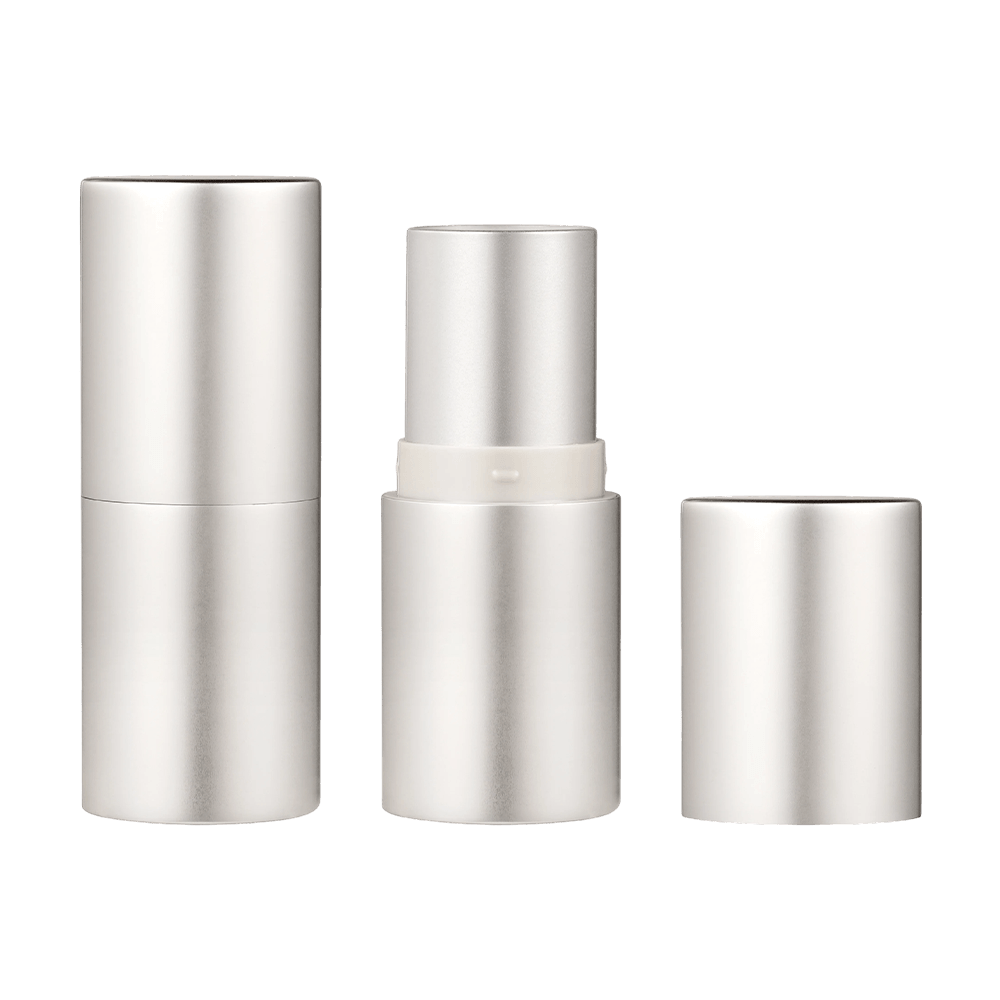
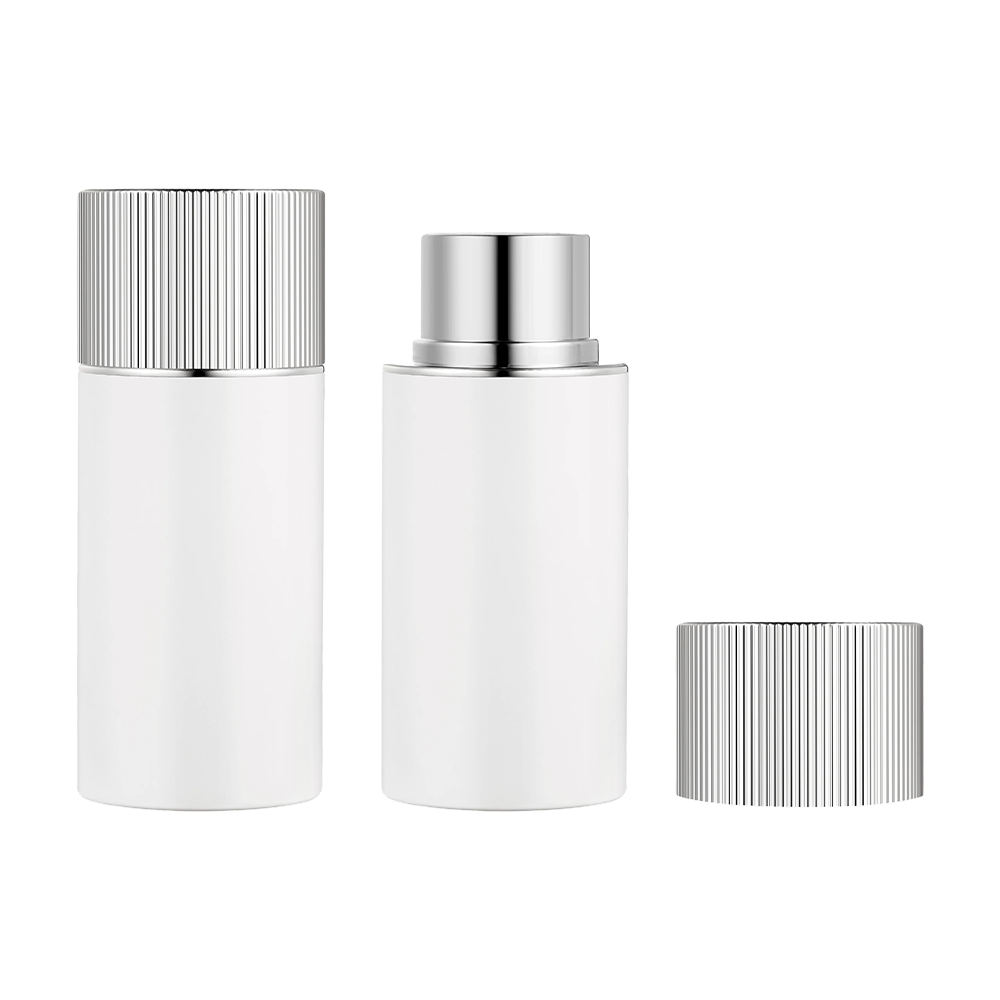
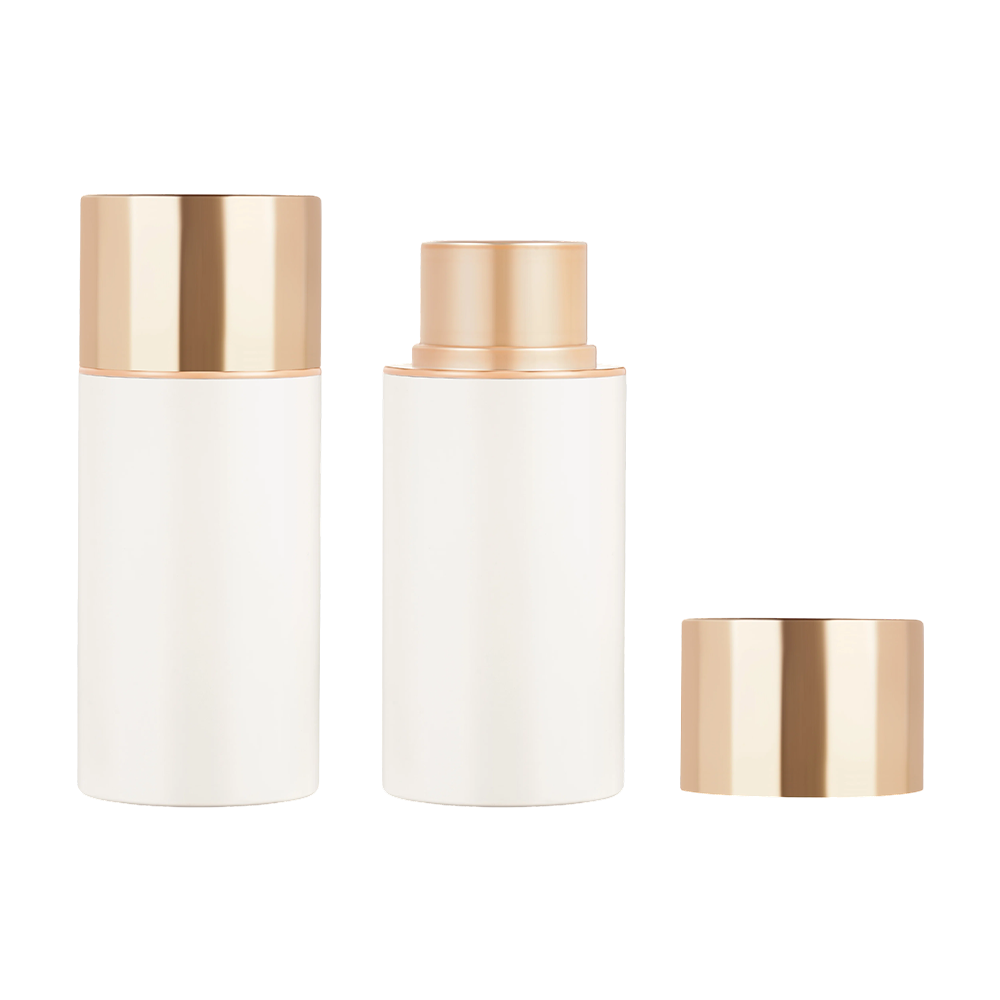
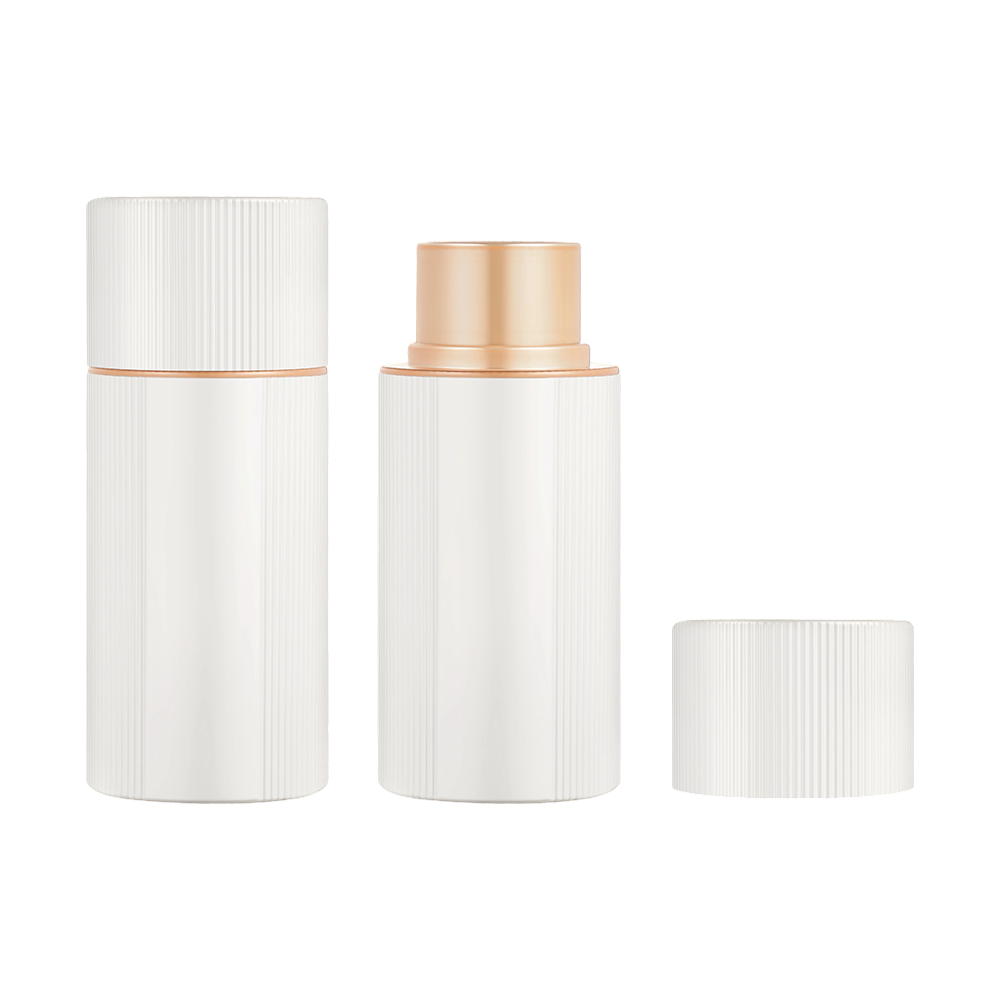
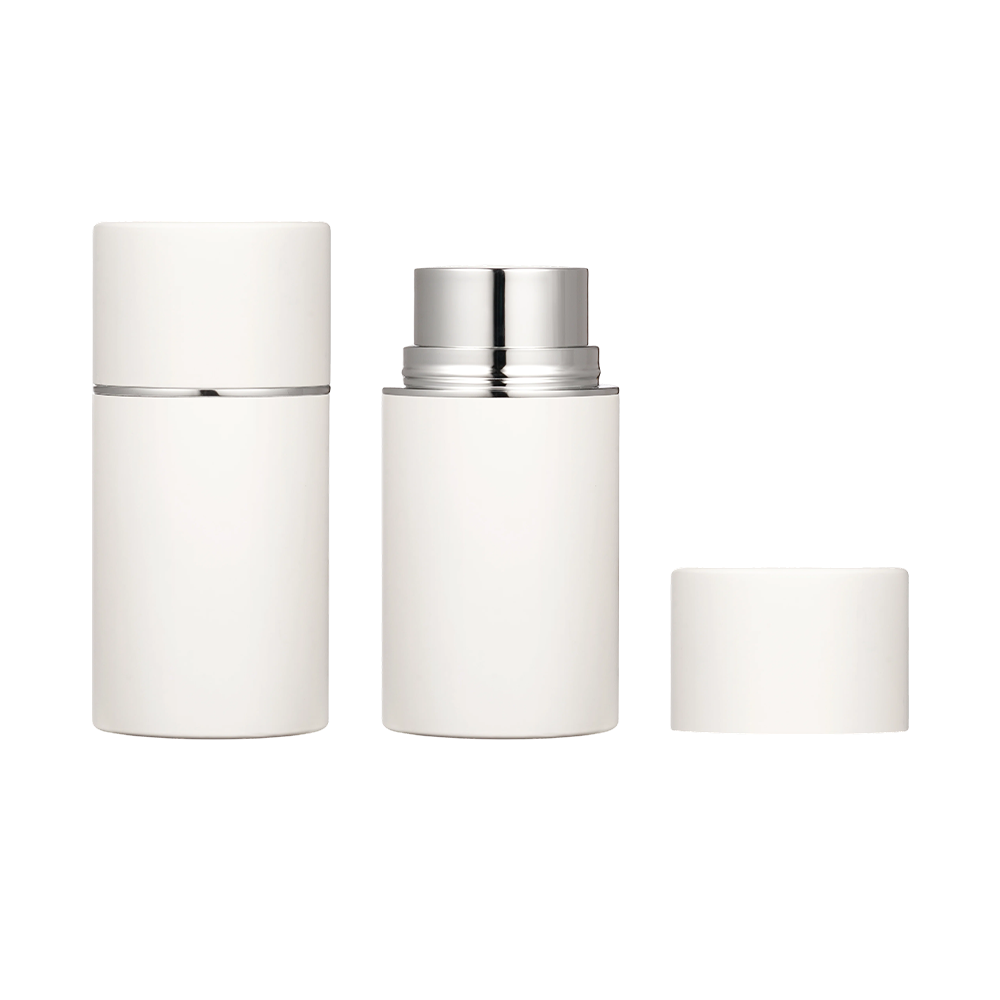
For solid and anhydrous formulas, a twist up stick usually beats airless on both cost and convenience. A concealer stick, blush stick, or highlighter stick needs no engine and no vacuum, and the user can see how much product is left without guessing. The round custom cosmetic concealer stick case in our catalogue takes a standard 4 g to 6 g bullet and accepts the same surface treatments used on metal lipstick tubes.
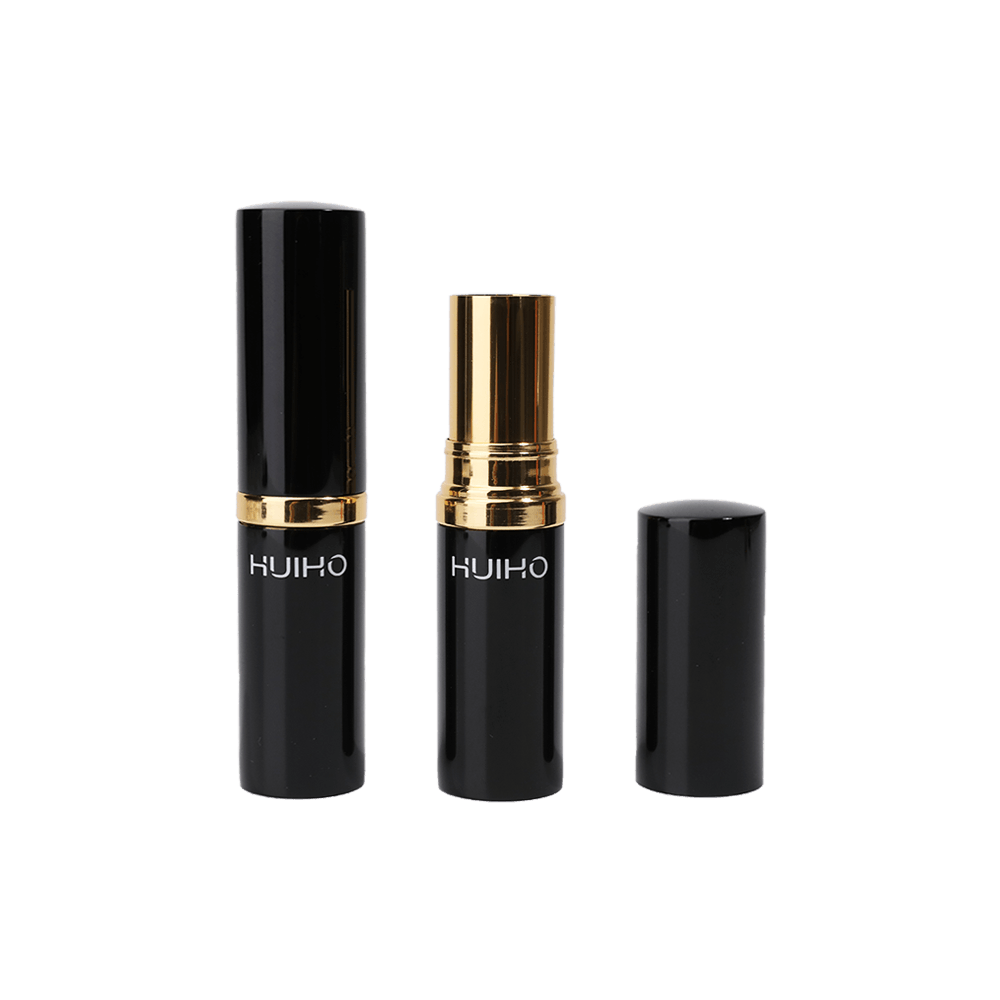 Round Custom Cosmetic, Concealer Stick, Blush Stick,Highlighter Stick HL8321Location: China Product Name: Round Custom Cosmetic, Concealer Stick, Blush Stick,Highlighter Stick HL8321 Business Type: Manufacturer, Exporter Terms of payment and deliv...View Product →
If your brief mixes a liquid and a solid in one range, it is rarely efficient to force both into the same container family. Match the format to the formula first and let the decoration carry the brand consistency.
Filling an airless bottle to the brim is the most common mistake we see on a first order. The piston needs headroom, and the formula needs room to move before the vacuum forms. As a working rule, fill to 85 percent to 90 percent of nominal capacity, then confirm the exact figure with a filling trial on the production line.
The chart shows the gap between what a bottle can hold and what it should hold, and the gap widens as the body gets bigger. A 15 ml body is normally filled to about 13 ml, which leaves the piston room to travel and the formula room to move when the actuator is pressed. A 100 ml airless body follows the same rule at a larger scale, and the missing 10 ml is not wasted space, it is the working volume of the pump. Overfilling is the single most common cause of leakage in the first week, because the piston has nowhere to start and the internal pressure rises as the cap is tightened. Underfilling creates a different problem, since the pump may need three or four strokes before it primes and the consumer reads that as a faulty product. Confirm the final figure with a filling trial on the actual engine, because wall thickness and piston lip design shift the number by a millilitre or two in either direction.
Viscosity decides the engine. Thin, watery formulas need a tighter engine and a smaller inlet orifice to stop the nozzle from dripping, while thick emulsions need a wider inlet and a piston with a softer lip. Ask for a dose curve at the viscosity you actually produce, not at the viscosity you tested in the lab.
Not every liquid needs a vacuum. A liquid eyeliner or brow pen uses a wiper and a fine applicator instead, and that wiper controls the dose far more cheaply than a pump engine. Our empty liquid eyeliner tube range covers that route for small dose liquid formulas with a thin consistency.
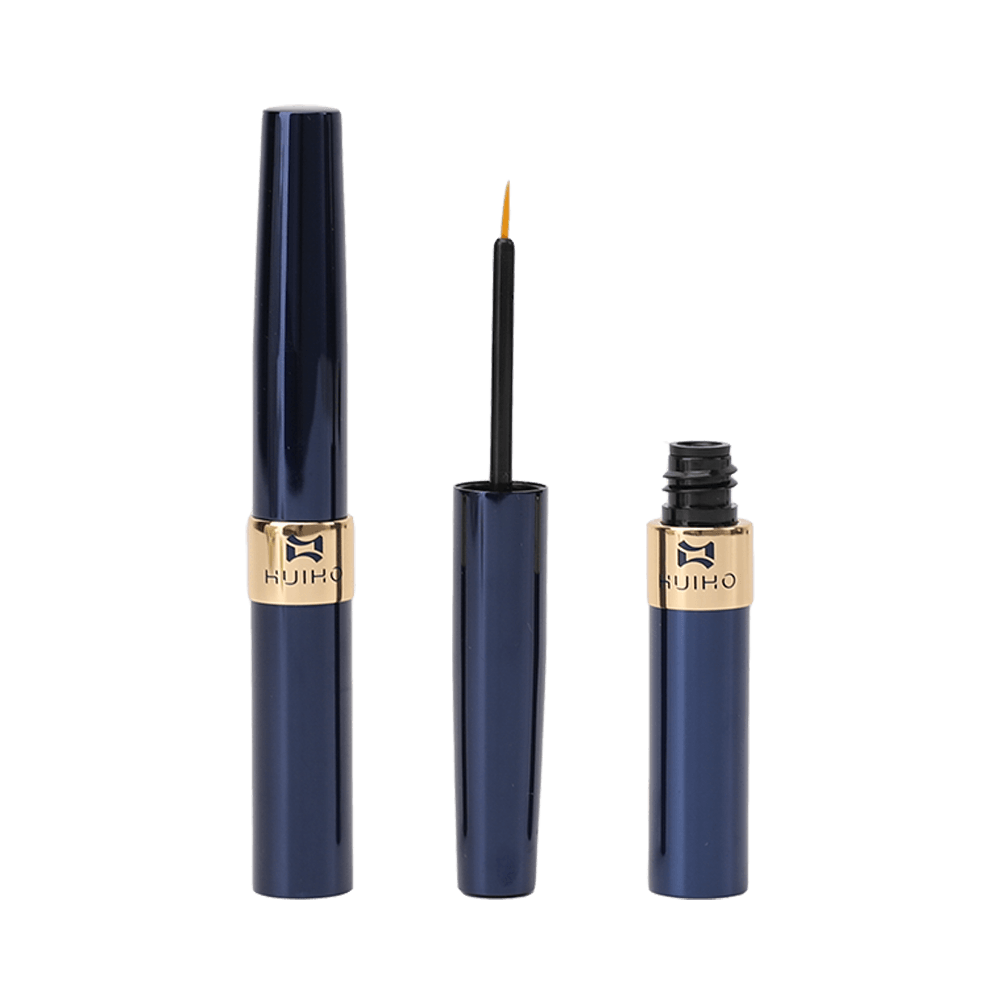 Empty liquid eyeliner tubes containers custom EL001Location: China Product Name: Empty liquid eyeliner tubes containers custom EL001 Business Type: Manufacturer, Exporter Terms of payment and delivery: FOB Minimum orde...View Product →
Body material drives both barrier performance and cost. Polypropylene is the default for airless bodies because it resists most cosmetic solvents and holds a reliable piston seal. PET offers better clarity and a slightly higher moisture barrier, and post consumer recycled grades are now widely available at 30 percent to 50 percent content. Coated glass looks premium, but the weight adds freight cost and an uneven inner wall can make the piston skip.
Decoration is where brands usually spend the surplus. Spray coating, silk screen printing, hot stamping, and anodised aluminium collars all work on airless bodies, and each one adds a step and a tolerance. A hot stamped ring close to the actuator can interfere with the stroke if the film builds unevenly, so keep decoration away from moving parts and specify a minimum clearance. The same logic applies here as when choosing cosmetic packaging materials for any other format: compatibility first, appearance second, cost third.
Refill design deserves a mention. A screw out inner cartridge lets the consumer keep the decorated outer shell and replace only the chamber and piston assembly, which can cut material use by roughly half. The catch is that the threads have to survive repeated assembly, so specify the thread profile and the number of open and close cycles in the brief rather than after the tool is cut.
Airless failures rarely come from the mould. They come from tolerance stack up, material compatibility, and skipped testing. Before you sign off a tool, run this sequence:
Ask your supplier for the piston material and the gasket compound in writing, because nitrile, silicone, and EPDM behave very differently against essential oils and high alcohol formulas. Ask for the recommended fill volume as a percentage of nominal capacity, not just a millilitre figure. Ask how the engine is tested before assembly, and ask what happens if a batch misses the dose specification. A supplier who answers those four questions quickly has usually solved them on another project already.
 Empty Foundation, Concealer Stick, Blush Stick,Highlighter Stick HL8322Location: China Product Name: Empty Foundation, Concealer Stick, Blush Stick,Highlighter Stick HL8322 Business Type: Manufacturer, Exporter Terms of payment and delivery: ...View Product →
The same discipline carries over to solid formats. Our empty foundation and concealer stick tube is specified with a defined thread profile and a tested seal, so the compatibility and drop checks above apply unchanged.
Airless pump bottles repay the extra cost when the formula is fragile or expensive, and they punish shortcuts when the fill volume, the engine, and the gasket are chosen separately. Decide the format from the formula first, set the dose second, and pick the material and decoration last. If you want a second opinion on a specific brief, our packaging team can review the formula profile, propose a bottle and engine combination, and produce a filled sample for your own stability test before you commit to a tool.