Hello Ningbo Huiho Cosmetics Packaging Co., Ltd. - China Mascara Tubes Packaging Manufacturers


Your formula is approved, your artwork is signed off, and then the first pre-production sample of your lip gloss bottle comes back from a shipping simulation with a thin ring of oil sitting on the cap thread. Nothing has leaked into the carton, but the gloss has climbed into the closure, and now you have a problem that will repeat itself across 5,000 units. Most brands arrive at this moment because they chose a bottle for lip gloss the way they choose a lipstick shade, by look. A lip gloss container is a packaging system, and it has to be specified like one.
So here is the conclusion first: buy the seal and the applicator first, the capacity second, and the decoration last. Everything below explains why that order matters and what to check at every step.
Content
A lip gloss bottle has four functional parts: the body, the closure, the wiper, and the applicator. Only one of them is visible in a product photo, and it is usually the least critical.
The seal keeps a low-viscosity formula where it belongs. Lip gloss typically sits between 20,000 and 80,000 centipoise, which means it flows more easily than a cream but slower than water. That range is exactly where a weak seal fails. A plug-style liner, a correctly sized screw thread, and a cap torque spec your filling line can actually hold are the three points that decide whether a pallet arrives clean after a hot container ride.
The wiper matters just as much. It is the small elastomer collar inside the neck that strips excess product off the wand as it is pulled out. If the wiper orifice is too wide, the wand arrives overloaded and the gloss smears. Too tight, and the wand drags, the doe-foot crushes, and customers complain that the gloss skips. Wiper hardness, orifice diameter, and wand diameter are a matched set. Change one and you change the dose. If a supplier cannot give you a wiper specification and a cap torque range, keep looking.
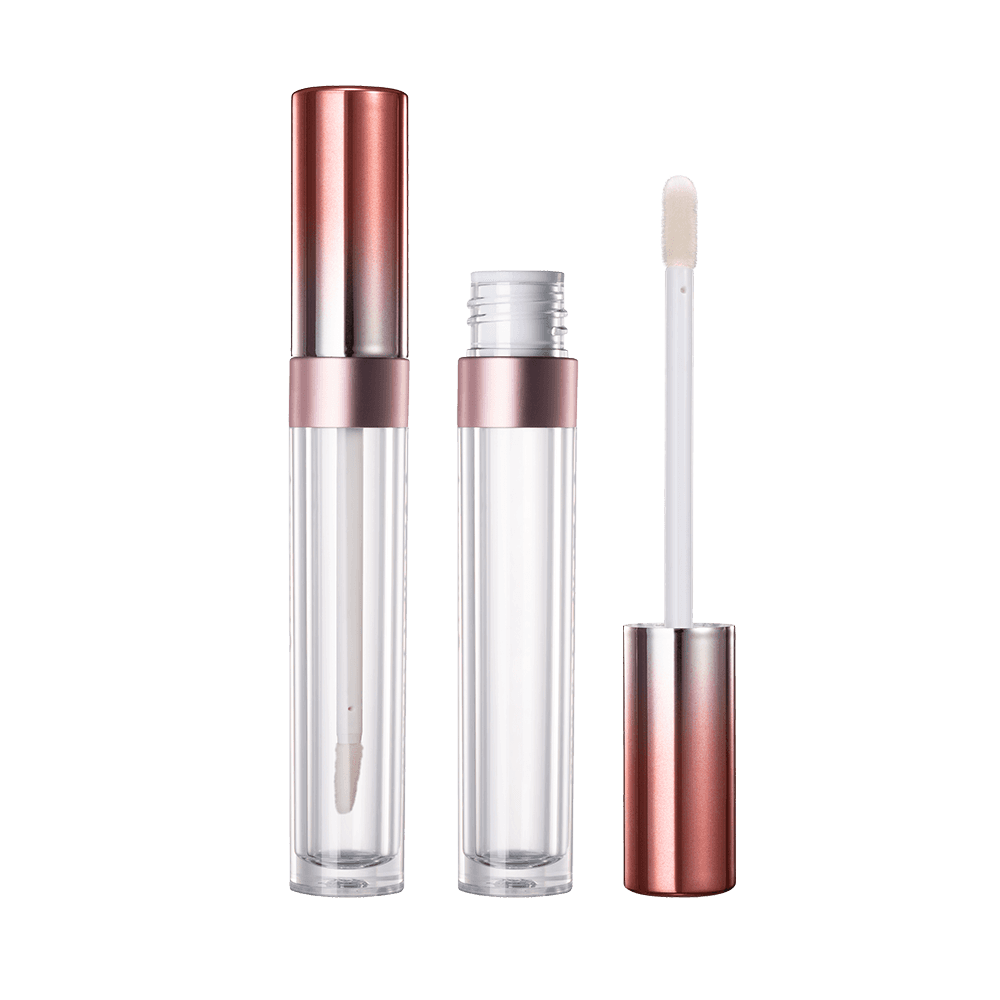 Empty Lip Gloss Tube LG 006 with Acrylic Bottle and Aluminum CapModel LG 006 measures Φ17 x 118 mm and pairs a clear acrylic bottle with an aluminum cap and shoulder; custom logo decoration available.View Product →
A 5 ml bottle does not hold 5 ml of gloss. Standard practice leaves roughly 15 to 25 percent headspace so the product never reaches the neck, the wiper, or the cap during transport and thermal expansion. A nominal 5 ml bottle is therefore usually filled to about 4 ml.
Ask any filling line what they need and you will hear the same answer: a fill line mark and a stated maximum fill volume. The mark is often a small molded line or a molded-in circle on the body. If your bottle has none, request one, or ask the supplier for a filling height drawing before tooling is cut. Capacity options worth knowing:
A body that is too narrow for its volume also becomes unstable on the filling line, and narrow cylinders are harder to decorate with a clean wrap.
Material choice is where first-time buyers either overspend or under-protect. PET gives a clear, glass-like body, good chemical resistance, and low cost, so it stays the default when the gloss color is part of the design. ABS is opaque, easy to color to an exact target, and takes printing and spraying very well, and it feels warmer in the hand than PET. Aluminum is the durability and barrier choice: it blocks oxygen, moisture, and light almost completely, which suits formulas built on volatile oils or oxidation-sensitive ingredients. PCR-PET and mono-material designs are now common requests for brands making recycling claims, so confirm the actual recycled content percentage and whether the cap belongs in the same waste stream before you print anything on the label.
| Material | Appearance | Barrier and durability | Typical lip gloss use |
|---|---|---|---|
| PET | Clear, glass-like, can be tinted | Moderate barrier, good chemical resistance, light weight | Retail tubes where the gloss color sells the product |
| ABS | Opaque, precise color matching, warm hand feel | Good impact strength, lower barrier than aluminum | Mass-market glosses and heavy decoration programs |
| Aluminum | Metallic, matte or bright, anodized or sprayed | Excellent light, oxygen, and moisture barrier | Premium glosses, lip oils, long shelf-life formulas |
| PCR-PET | Clear to slightly hazy depending on recycled content | Similar to virgin PET with slightly lower clarity | Brands with sustainability or refill programs |
| Aluminum cap with PET body | Two-tone, mixed-material look | Strong seal at the neck plus a clear reservoir | Slim round tubes and hybrid designs |
The wand decides how the product feels on the lips. A doe-foot applicator gives a soft, even deposit and works well for thicker glosses and lip oils. A brush applicator gives a finer, more precise line and suits thinner, high-shine formulas. A spatula or paddle tip is common in lip plumping products because it spreads a thin film without dragging.
Two details are worth specifying in writing. First, wand length must suit the tube height so the tip reaches the bottom, because a short wand leaves product stranded and generates complaints at the very end of the bottle. Second, wiper and wand diameters must be matched; a 5.5 mm wand in a wiper designed for 6.0 mm will not strip product properly. For double-end tubes, expect a second wiper and a plug between the two chambers, and ask how that plug is retained and how it is tested for cross-contamination when each end carries a different color.
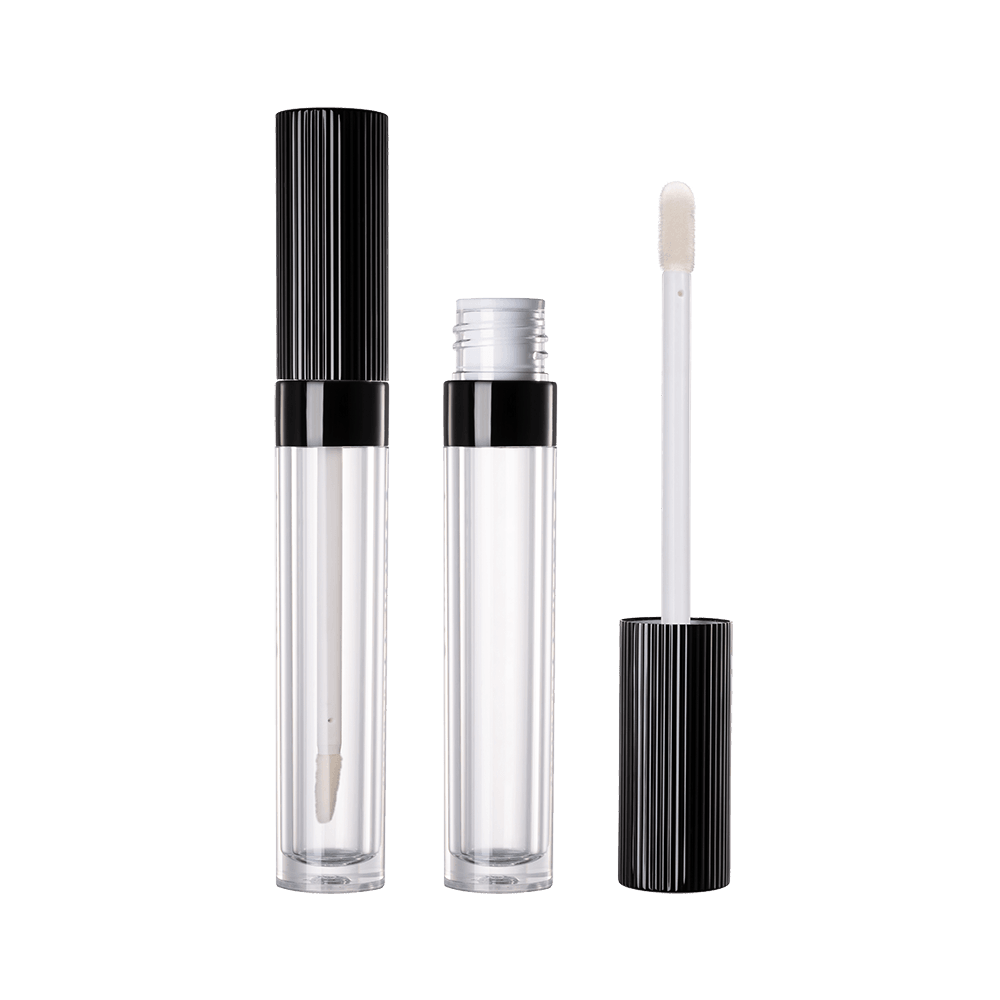 Lip Gloss Cases LG048 Cosmetic Packaging Tube from China ManufacturerModel LG 048 measures Φ17.4 x 118.6 mm; this empty lip gloss case is offered by a China-based manufacturer/exporter with 20k MOQ and FOB terms.View Product →
Decoration should never be the reason you settle for a weak seal. Once the container performs, the common finishes are predictable:
Whatever you choose, write abrasion and adhesion tests into the specification. A simple tape pull test plus a 500-cycle rub test catches most decoration problems before bulk production starts.
Approving a bottle for lip gloss on appearance alone is the most expensive mistake in the category. Run these six checks on any candidate before you sign off on bulk:
If you want a broader view of the decisions behind a lip gloss launch, this summary of lip gloss packaging considerations covers the same ground from the brand side.
Custom lip gloss bottles are usually built one of two ways: an existing mold plus new decoration, or new tooling when the shape is genuinely unique. Either way, ask three questions early. Which parts use existing tooling and which require new tooling? What is the minimum order quantity for the body, the cap, and the decoration separately? And who owns the tooling after the project ends?
A vertically integrated manufacturer that produces both the aluminum and the plastic components in house can often shorten the sampling cycle, because the cap, body, wiper, and applicator do not have to be coordinated across three separate vendors. Ningbo Huiho Cosmetics Packaging is one example: two own factories, an in-house testing lab, and a product range covering lip gloss tubes, mascara tubes, lipstick tubes, eyeliner and eyebrow pencil cases, and concealer sticks, supplied to brands and OEM customers across Europe, the Americas, the Middle East, and Southeast Asia.
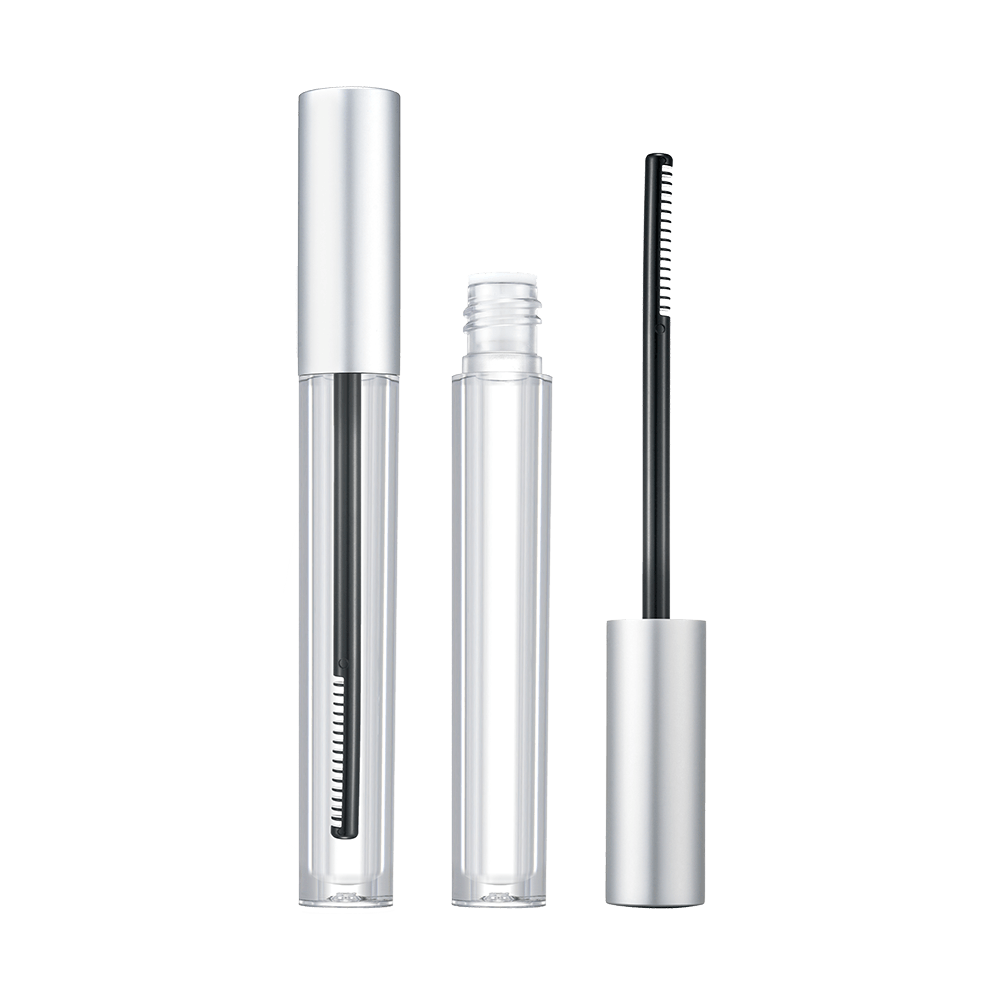 Lip Gloss Cases LG051 from Ningbo Huiho Cosmetics PackagingModel LG 051 measures Φ15.3 x 125.8 mm and is supplied by Ningbo Huiho, a China-based manufacturer/exporter with 20,000-unit MOQ and FOB terms.View Product →
None of this is complicated, but all of it is order-dependent. Fix the seal and the wiper, confirm the fill volume and headspace, pick the material that protects your formula, and only then choose the finish that sells it. Brands that work in that sequence get to market with fewer surprises, and they spend their decoration budget on a bottle that already performs.